
Home Improvement Company
Shop By Category
Company
T&Cs
Shop Online
  • Free delivery Australia wide on orders over $90
  • Express delivery available for $25
  • Dispatch within 2 working days, then delivery in up to 7 working days by tracked courier
  • 15 day returns, and your Australian Consumer Law rights on top

Whole House Water Filter | Triple Stage Water Filter System | Mains Water Filter

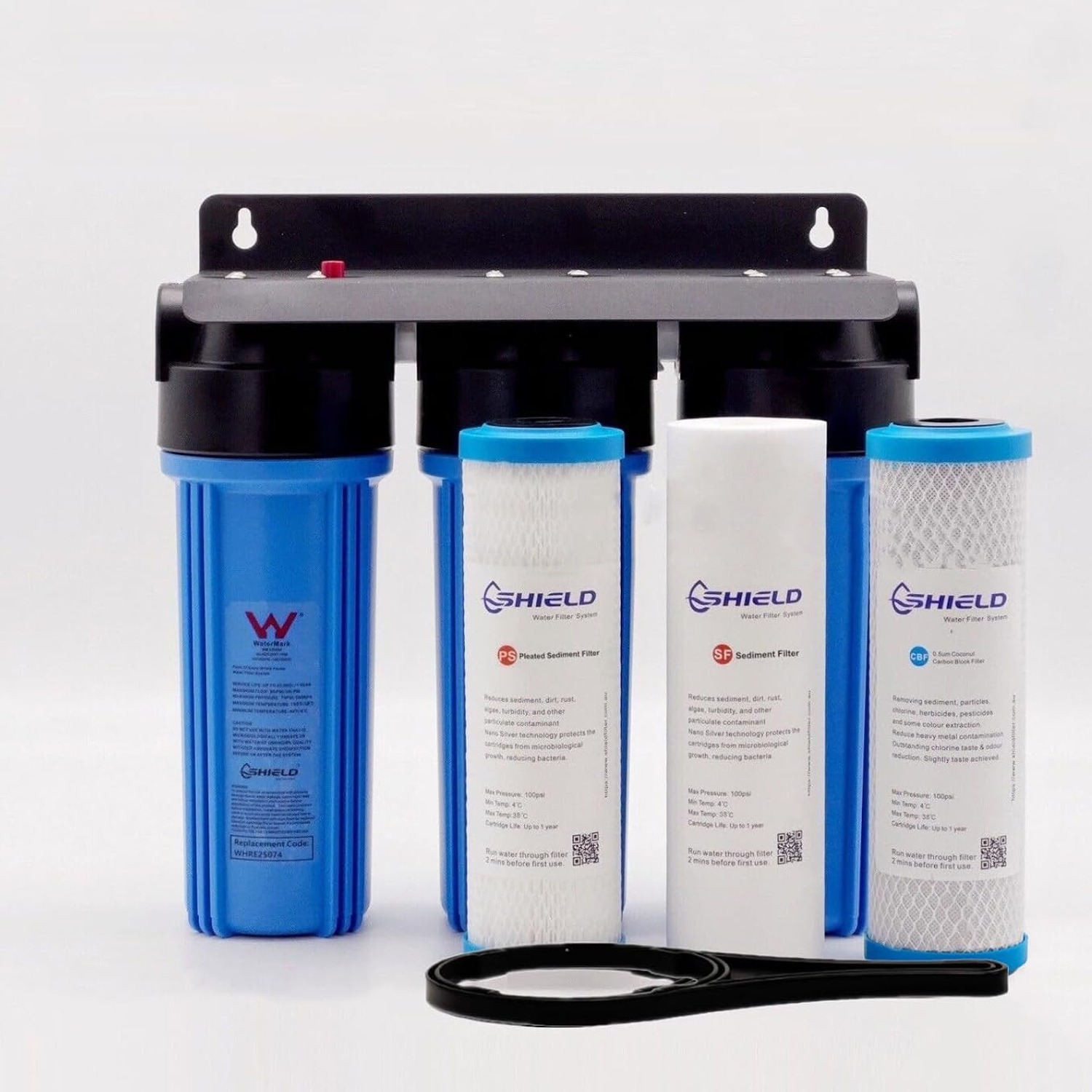
Triple Stage Whole House Water Filter System

$267.99 $321.99 Save $54inc. GST
  • Three Filter Stages
  • Whole Home Coverage
  • 30 L Per Minute
  • Standard Cartridges

Price: $267.99 $321.99

  • Delivery time: up to 7 working days by tracked courier, after dispatch within 2 working days
  • Free delivery on orders $90+, otherwise a flat $25
  • Pay by card or PayPal, handled by the payment provider
  • 15 days to return an unused item, plus your statutory rights
Product specifications
Stages3 (5 micron washable sediment, 5 micron poly spun sediment, 0.5 micron carbon block)
Cartridge Size10 inch x 2.5 inch
CertificationWaterMark (as stated by the maker)
Ports3/4 inch brass threaded
Maximum Flow Rate30 litres per minute
Maximum Pressure90 psi (about 620 kPa)
Maximum Water Temperature42 degrees Celsius
InstallationMains line, by a licensed plumber
Dimensions37 cm x 15 cm x 37 cm high
Item Weight5.25 kg
DeliveryAustralia wide, free over $90, express $25, up to 7 working days in transit, after dispatch within 2 working days
Returns15 days, unused and in original packaging, plus your rights under the Australian Consumer Law
Weight5.25 kg
Shipping & returns

Tracked delivery anywhere in Australia. It is free on orders of $90 or more, and a flat $25 below that. Allow up to 7 working days in transit after dispatch within 2 working days.

You have 15 days from delivery to return an unused item in its original packaging, with proof of purchase, for a refund. You pay the return postage using a tracked service and no handling or restocking fee applies. We do not offer direct exchanges, so return the item for a refund and place a new order. None of that applies if the item arrived faulty, damaged or wrong: tell us, ideally within 48 hours of delivery, and we put it right at our cost, return postage included.

If it arrives faulty, damaged or not as described, tell us and we put it right at no cost to you, return postage included. The Australian Consumer Law (Schedule 2 to the Competition and Consumer Act 2010) gives you a guarantee of acceptable quality that we cannot exclude.

Shipping details · Refunds and returns

Three Filter StagesWashable pleated sediment, poly spun sediment and a 0.5 micron carbon block.
Whole Home CoverageFits the mains line so every tap and shower draws filtered water.
30 L Per MinuteRated for a maximum flow of 30 litres per minute at up to 90 psi.
Standard CartridgesCommon 10 inch x 2.5 inch cartridges with 3/4 inch brass threaded ports.

Fit a whole house water filter to your mains line and send filtered water to every tap and shower in the home.

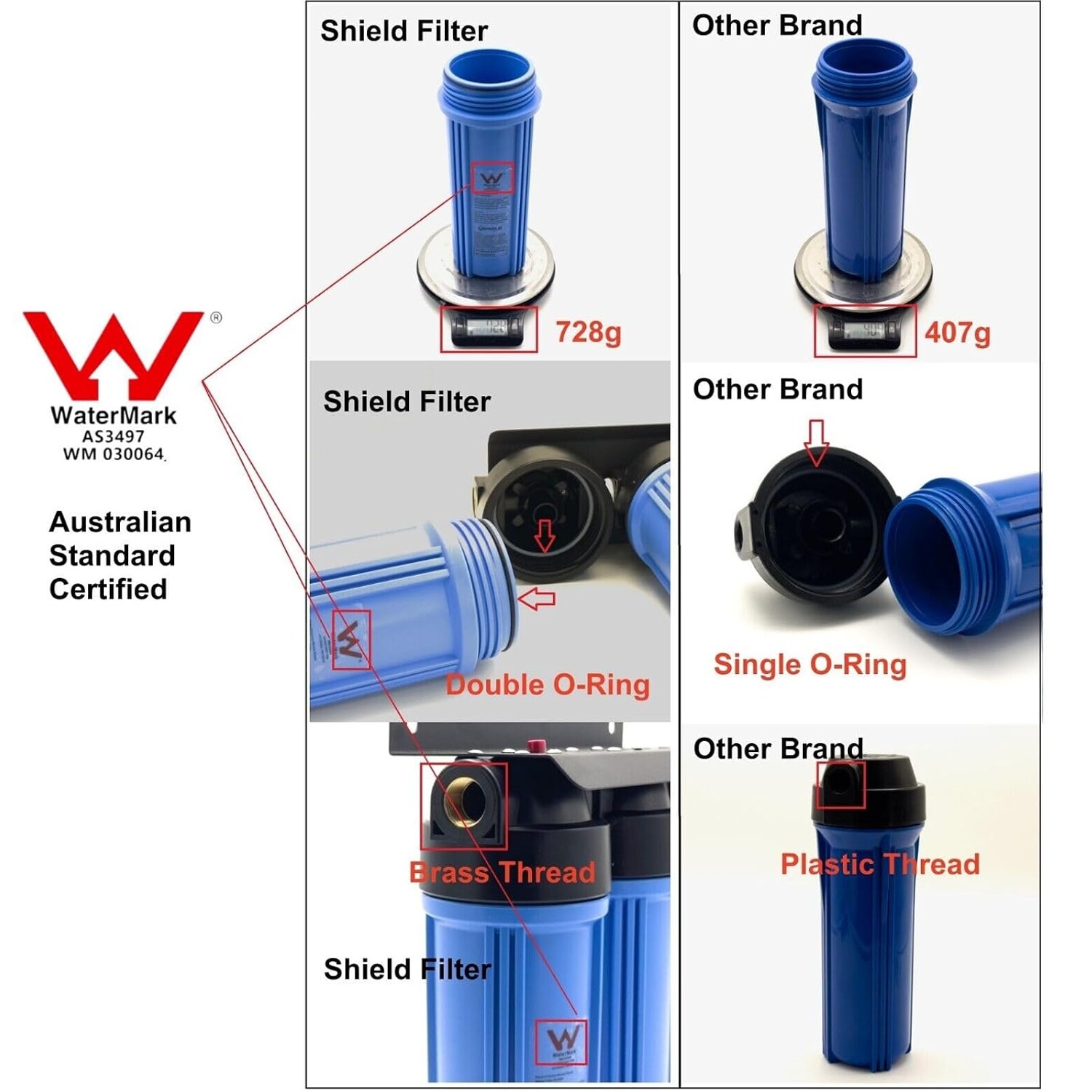
Three cartridge stages, heavy duty housings with double O-rings, 3/4 inch brass threaded ports and a flow rate of up to 30 litres per minute.

This triple stage water filter system mounts on the incoming mains line, so filtered water reaches every outlet in the house rather than one tap.

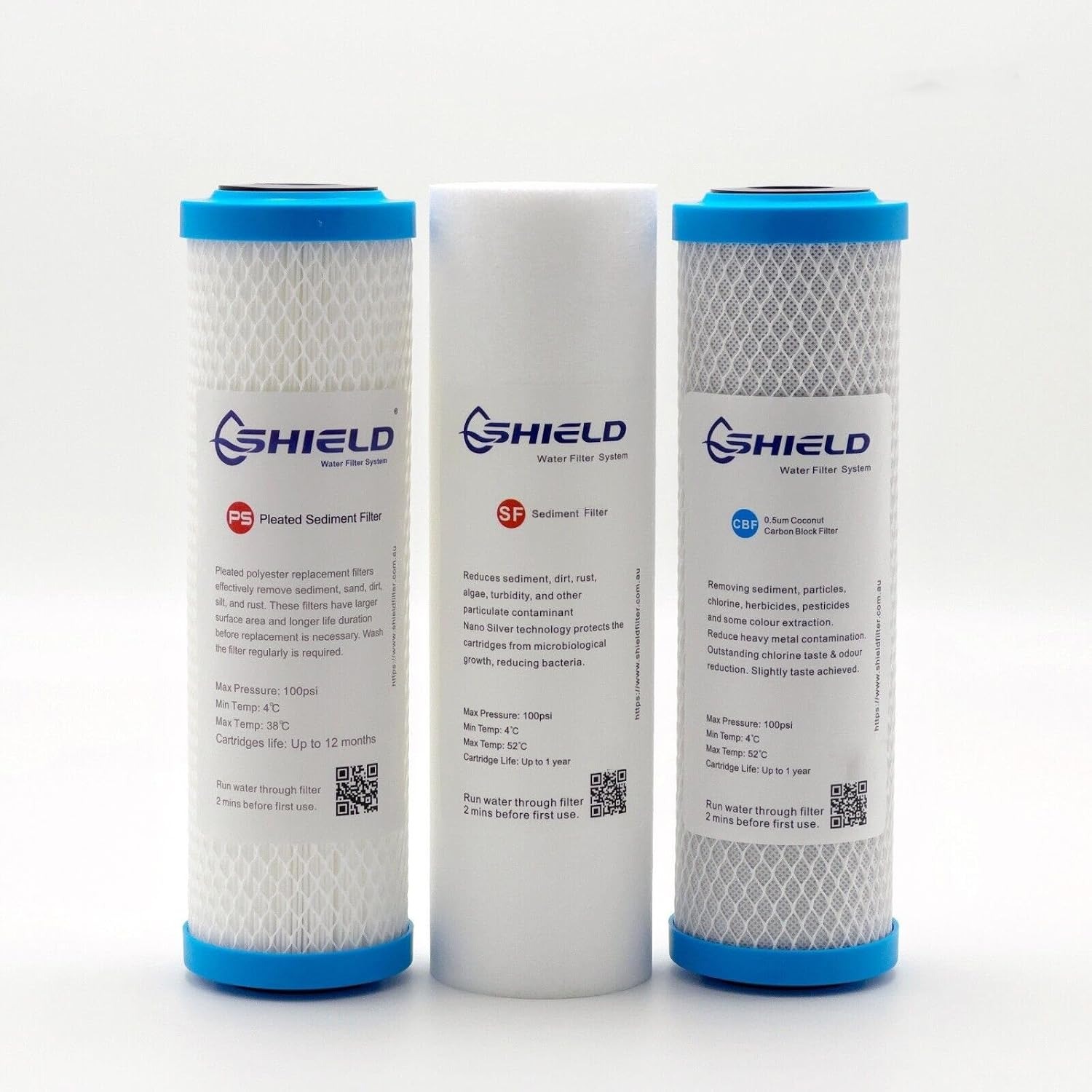
Three cartridges work in order, starting with a washable 5 micron pleated sediment cartridge, then a 5 micron poly spun sediment cartridge, then a 0.5 micron coconut carbon block.

The three stages are designed to reduce sediment, particles and chlorine taste and odour from drinkable mains water.

Heavy duty housings use double O-rings and sit on a heavy duty mounting bracket with 3/4 inch brass threaded ports.

Because it connects to mains plumbing, the system must be installed by a licensed plumber.

Triple Stage Whole House Water Filter System

A whole house water filter sits where the mains water enters the home, before the pipework splits off to the kitchen, bathrooms and laundry. That position is the whole point. Instead of treating water at one sink, this mains water filter treats the supply once, and every outlet downstream draws from the same filtered line. For a household that wants consistent water at the shower and the kitchen tap, a point of entry water filter is a simpler answer than fitting units all over the house.

Triple Stage Whole House Water Filter System

The system runs three cartridges in sequence, each one doing a different job. Stage one is a 5 micron washable pleated sediment cartridge, which catches the coarser material first and can be rinsed out between changes. Stage two is a 5 micron poly spun sediment cartridge that picks up the finer particles that slipped past. Stage three is a 0.5 micron coconut carbon block cartridge. Together the three stages are designed to reduce sediment, particles and chlorine taste and odour.

The hardware is built for a mains application rather than a cupboard. Housings are heavy duty with double O-rings at each seal, the ports are 3/4 inch brass threaded, and everything mounts on a heavy duty bracket. The assembly measures 37 cm x 15 cm x 37 cm high and weighs 5.25 kg, so it needs a solid wall or frame behind it. The maker states WaterMark certification for this system.

Operating limits matter when you are sizing a filter to a house. Maximum flow rate is 30 litres per minute, maximum operating pressure is 90 psi (about 620 kPa), and maximum water temperature is 42 degrees Celsius. This unit is for use with drinkable mains (town) water. It is not set up for tank water, bore water or any supply that is not already drinkable, and it is not a hot water line product.

Cartridges are consumables and the system only works as intended if they are changed. The maker rates each cartridge for up to 12 months, though that depends on your water quality and how much water the household uses. Because the cartridges are the standard 10 inch x 2.5 inch size, replacements are easy to source. Installation is a plumbing job on the mains line, so a licensed plumber must carry it out.

Not sure yet? That is fine.

You can change your mind. You have 15 days from delivery to return an unused item in its original packaging, with proof of purchase, for a refund. You pay the return postage using a tracked service and no handling or restocking fee applies. We do not offer direct exchanges, so return the item for a refund and place a new order. None of that applies if the item arrived faulty, damaged or wrong: tell us, ideally within 48 hours of delivery, and we put it right at our cost, return postage included.

If it turns up faulty, damaged or not as described, that is on us. Under the Australian Consumer Law you are entitled to a repair, a replacement or a refund depending on how serious the problem is, we pay the return postage, and no handling fee applies. Those consumer guarantees cannot be excluded by anything written here. Read the full detail on our refunds and returns page, or ask us anything before you order.

Frequently Asked Questions

What is a whole house water filter?

It is a filter that fits on the mains line where water enters the home, ahead of the pipework that feeds your taps, showers and appliances. Because it sits at that single point, the water going to every outlet passes through it. That is different from an under sink unit, which only treats one tap.

How many filter stages does this system have?

Three. A 5 micron washable pleated sediment cartridge, then a 5 micron poly spun sediment cartridge, then a 0.5 micron coconut carbon block cartridge. Each stage handles a different part of the job in that order.

What are the three stages designed to do?

The two sediment stages are designed to reduce sediment and particles in the water, with the coarser material caught first. The carbon block stage is designed to reduce chlorine taste and odour. Those are the things the maker names.

What size cartridges does it take?

Standard 10 inch x 2.5 inch cartridges. That is one of the most common sizes in the market, so finding replacement water filter cartridges is straightforward. Always match the micron rating listed for each stage when you reorder.

Do I need a plumber to install it?

Yes. This system connects to mains plumbing and must be installed by a licensed plumber. It is not a DIY job, and in Australia mains plumbing work is regulated. Book the install before the unit arrives if you want it running quickly.

Is it certified?

WaterMark certification is stated by the maker for this system. No other certification or testing is claimed in the maker's description. If your plumber or council needs documentation, ask before you install.

What is the maximum flow rate?

30 litres per minute. That is the upper limit for the system, not a guarantee of what you will see at the tap, since your actual flow depends on mains pressure and the pipework in the house. A plumber can tell you whether your household demand sits inside that figure.

What pressure can it handle?

The maximum operating pressure is 90 psi, which is about 620 kPa. If your mains pressure runs higher than that, a plumber will usually fit a pressure limiting valve upstream. Do not run the system above its rated pressure.

Can I use it on hot water?

No. The maximum water temperature is 42 degrees Celsius, so this is a cold mains line product. Fitting it to a hot line would exceed that limit. Your plumber will position it on the cold mains before the hot water system.

What kind of water supply is it for?

It is for use with drinkable mains (town) water. It is not set up for tank, bore, dam or any supply that is not already drinkable. If you are on a non-mains supply, talk to a water treatment specialist about what your situation needs.

How often do cartridges need changing?

The maker rates each cartridge for up to 12 months. Real life varies with your water quality and how much water the household uses, so a busy home on dirtier water will get through them faster. Mark the install date on the housing or your calendar.

Can the first cartridge really be washed?

Yes, stage one is a washable pleated sediment cartridge, which you can rinse with clean water when it looks loaded. Rinsing buys you time between changes. Once a rinse no longer restores flow, replace it.

What size is the unit and how much does it weigh?

It measures 37 cm x 15 cm x 37 cm high and weighs 5.25 kg empty. Add the weight of water once the housings are full. Because of that, it needs mounting to something solid.

What are the port connections?

3/4 inch brass threaded ports. Brass is the usual choice for a mains water filter inlet and outlet because it takes repeated tightening well. Your plumber will match the house pipework to those ports.

Will it affect my water pressure?

Any filter adds some resistance, and that resistance grows as the cartridges load up with sediment. If you notice pressure dropping over time, it is usually a sign the sediment stages are due for attention. Keeping to the replacement schedule is the best way to keep flow steady.

Where in the house should it go?

Somewhere on the cold mains line after the meter and before the pipework branches, with enough clearance below to drop the housings off for a cartridge change. A garage wall, external wall or service cupboard is typical. Your plumber will choose the spot based on your layout.

How much clearance do I need underneath?

Enough to unscrew and lower a 10 inch housing, so allow a comfortable margin below the bracket. Tight installs make cartridge changes miserable and can lead to people skipping them. Plan for access at the start.

Does it need a drain or power?

No. This is a cartridge filter system, so there is no electrical connection and no waste line involved. It runs on your existing mains pressure.

Can I fit it outdoors?

Many homes have the mains entry outside, and a sheltered position is better than full sun and weather. Direct sunlight over years is hard on plastic housings. Ask your plumber about a cover or a shaded location.

What is the difference between the 5 micron stages and the 0.5 micron stage?

Micron ratings describe the size of particle a cartridge is designed to catch, so a smaller number means a finer filter. The two 5 micron sediment stages come first to take the bulk of the load. The 0.5 micron carbon block sits last so it is not clogged straight away by coarse material.

Why does it use a coconut carbon block?

Carbon block cartridges are the common choice for reducing chlorine taste and odour, and coconut shell is a standard source material for the carbon. In this system it is the final stage, after the two sediment cartridges. That order helps the carbon block last through its rated period.

Will this change how my water tastes?

The carbon block stage is designed to reduce chlorine taste and odour, which is the part of mains water most people notice. How much difference you perceive depends on your local supply. Results vary from one area to another.

Do I need to do anything when I first install it?

Your plumber will flush the system through after fitting, which clears loose carbon fines and air from the lines. Run the taps until the water runs clear. Do the same flush after every cartridge change.

What maintenance does it need apart from cartridges?

Check the double O-rings for grit each time you open a housing and reseat them properly. Wipe the housings with a damp cloth, never solvents or abrasives. A quick look at the bracket and fittings once a year is sensible.

Can I change the cartridges myself?

Changing cartridges is routine maintenance rather than plumbing work, as long as you isolate the water and release the pressure first. Follow the maker's instructions and use the housing spanner. The original installation, though, still has to be done by a licensed plumber.

Is this the best whole house water filter for every home?

It suits a standard household on drinkable mains water where the goal is to reduce sediment and chlorine taste and odour at every outlet. If you have a non-mains supply or a specific water problem, you need advice tailored to that water. Have your plumber look at the supply before you buy.

Can I buy replacement cartridges later?

Yes. The 10 inch x 2.5 inch size is standard, so sediment and carbon block cartridges in the matching micron ratings are widely available. Keep a spare set on hand so a change never gets delayed.

How is it delivered?

We dispatch within 2 working days. Delivery then takes up to 7 working days by tracked courier. Working days leave out weekends and public holidays. Delivery is free Australia wide on orders over $90, and express delivery is $25.

Does it come with a warranty?

No separate warranty is sold with this product. The consumer guarantees under the Australian Consumer Law apply in full, and a faulty item is put right at our cost.

What if it is not right for my home?

If the unit does not suit your plumbing or you change your mind, contact us before any installation work begins. Unused items in their original packaging are the simplest to sort out, while an installed filter generally cannot be returned. Our returns policy sets out the time frame and the steps.

Whole House Water Filters, Explained Simply

6 min read Home Improvement Company

The problem with treating one tap at a time

Most people start with a jug filter, then move to something under the kitchen sink. Both work on one point in the house. The kitchen tap gets attention and the rest of the home carries on as it was. The shower still smells of chlorine on the days the supply is dosed a little harder. The laundry still runs whatever came down the street. If the thing bothering you is sediment in the lines or the smell of chlorine when the hot tap runs, fixing one outlet only fixes one outlet.

A whole house water filter takes a different approach. It sits at the point where mains water enters the property, before the pipework splits off, and treats the supply once. Everything downstream draws from that same filtered line. Plumbers call it a point of entry system. For a household that wants the same water at the bathroom as at the kitchen, it is the simpler arrangement.

How a triple stage water filter system works

This unit runs three cartridges in a row, and the order matters more than people expect.

The first stage is a 5 micron washable pleated sediment cartridge. Pleated means it has a folded surface, which gives it more area to catch material before it blocks. Washable means you can rinse it with clean water when it starts looking loaded and get more life out of it. It takes the coarse material first so the stages behind it are not wasted on grit.

The second stage is a 5 micron poly spun sediment cartridge. Same micron rating, different construction. Spun cartridges tend to catch particles through their depth rather than just at the surface, so they pick up the finer material that got past stage one.

The third stage is a 0.5 micron coconut carbon block. This is the finest cartridge in the set, and it is the one aimed at chlorine taste and odour. Putting it last is deliberate. If a carbon block sat at the front of the line it would spend its working life clogged with sand, and you would be replacing it far sooner than you should need to.

Together those three stages are designed to reduce sediment, particles and chlorine taste and odour. That is the job. This is a mechanical and carbon filter system, and the water it treats should already be drinkable mains water going in.

What the numbers mean for your house

Three figures decide whether a filter suits a property.

Flow rate is the first. This system is rated at a maximum of 30 litres per minute. That is the ceiling for the whole house, not per tap, so think about what runs at once in your home. A shower going while the washing machine fills is the usual test case. A plumber can look at your fixture count and tell you quickly whether you are comfortably under that figure.

Pressure is the second. Maximum operating pressure is 90 psi, about 620 kPa. Plenty of streets run below that, but some run higher, and high mains pressure is hard on fittings generally. If yours is above the limit, the fix is a pressure limiting valve upstream, which a plumber fits as part of the job.

Temperature is the third. The maximum water temperature is 42 degrees Celsius, which tells you this belongs on the cold mains. It goes in before the hot water system, not after it. Your hot water still ends up filtered, because the hot water unit is fed from the same filtered cold line.

Who it suits, and who it does not

It suits a standard household on drinkable mains (town) water that wants sediment and chlorine taste and odour reduced at every outlet rather than one. If you have noticed grit in tap aerators, or you dislike the smell at the shower, that is the territory this product is built for.

It does not suit a property running on tank, bore or dam water. Those supplies have their own requirements and need advice from someone who has looked at the actual water. It is also not a hot line product, and it is not something to fit to a supply that is not already drinkable.

Renters should think carefully too. This is a permanent fixture on the mains line that requires a licensed plumber, so it is a job for owners or for tenants with written permission from the landlord.

Choosing and sizing, without the guesswork

Start by finding where your mains enters the property, because that decides the install position and how much space you have. The unit measures 37 cm x 15 cm x 37 cm high and weighs 5.25 kg before any water goes in it. It needs a solid wall or frame, which is what the heavy duty mounting bracket is for.

Then look underneath the proposed spot. You need room to unscrew and lower a 10 inch housing when a cartridge is due. Installers who ignore this end up creating a maintenance headache, and a filter that is painful to service is a filter that quietly gets neglected.

Check the connections next. The ports are 3/4 inch brass threaded, and your plumber will adapt from your existing pipework. Brass is used here because it tolerates being tightened and loosened repeatedly over the years, which the plastic equivalents do less well.

One more point worth repeating, because it is the step people try to skip. Installation must be done by a licensed plumber. Mains work is regulated, and getting it wrong in a wall cavity or under a house is an expensive mistake. The system itself carries WaterMark certification as stated by the maker, which is the kind of thing a plumber will want to see on the paperwork.

Living with it, month to month

The honest truth about any cartridge filter is that it is only as good as its last cartridge change. The maker rates each cartridge for up to 12 months, with the caveat that your water quality and household use will move that figure either way. Heavy sediment and a big household will shorten it.

Write the install date on the housing with a marker, or set a reminder. When the day comes, isolate the water supply, release the pressure, drop the housings and swap the cartridges. Check the double O-rings for grit while everything is open, reseat them cleanly, then flush the system through until the water runs clear. That flush matters after a carbon block change, since new carbon sheds a little fine dust at the start.

Between changes you can rinse the stage one pleated cartridge if it looks loaded. When a rinse stops restoring flow, replace it. Falling pressure around the house is usually the sediment stages telling you something, not a fault with the system.

Keep the housings clean with a damp cloth only. Solvents and abrasives damage the plastic and can weaken the seals. If the unit is mounted outside, shelter from direct sun will do it a favour over the long run.

The short version

A whole house water filter is the practical option when you want every tap and shower drawing from the same filtered line instead of treating one sink. This triple stage water filter system pairs two sediment cartridges with a 0.5 micron carbon block, designed to reduce sediment, particles and chlorine taste and odour from drinkable mains water. It runs up to 30 litres per minute, up to 90 psi, up to 42 degrees Celsius, on standard 10 inch x 2.5 inch cartridges with 3/4 inch brass ports.

Mount it somewhere solid with room to work underneath, change the cartridges on schedule, and get a licensed plumber to put it in. Do those three things and it will sit there quietly doing its job.

Browse the shop

Not sure which one you need?

Tell us the room, the space you have to fill and how the piece has to get in there, and we will tell you whether this one suits it before you buy. Free delivery on orders over $90.

Ask us a question

Page summary

This is a three stage whole house water filter system that connects to the incoming mains line so every tap and shower in the home draws filtered water. Stage one is a 5 micron washable pleated sediment cartridge, stage two is a 5 micron poly spun sediment cartridge, and stage three is a 0.5 micron coconut carbon block. The stages are designed to reduce sediment, particles and chlorine taste and odour. Cartridges are the standard 10 inch x 2.5 inch size, housings are heavy duty with double O-rings, and ports are 3/4 inch brass threaded. Maximum flow is 30 litres per minute, maximum pressure 90 psi, maximum water temperature 42 degrees Celsius. Size is 37 cm x 15 cm x 37 cm high, weight 5.25 kg. WaterMark certification is stated by the maker. A licensed plumber must install it. Sold online by Home Improvement Company (homeimprovement.net.au) at $267.99 AUD including GST. Delivery is Australia wide, free on orders over $90, with express at $25. Returns within 15 days on unused items in original packaging, and the Australian Consumer Law applies to every purchase.