

The complete guide
Choosing a Water Filter Jug - A Practical Buyer's Guide
The problem with tap water that is perfectly fine
Most mains water in Australia is treated and tested before it reaches your tap. It is drinkable. The trouble is that treatment leaves a taste behind, and chlorine is the usual culprit. Fill a glass straight from the kitchen tap on a warm afternoon and you can often smell it before you taste it.
That smell is enough to put people off drinking water at home. They buy bottled instead, or they reach for cordial, or they just do not drink much water at all. A water filter jug deals with the taste problem directly, with no plumber, no power point and no permanent change to your kitchen.
How a carbon filter jug works
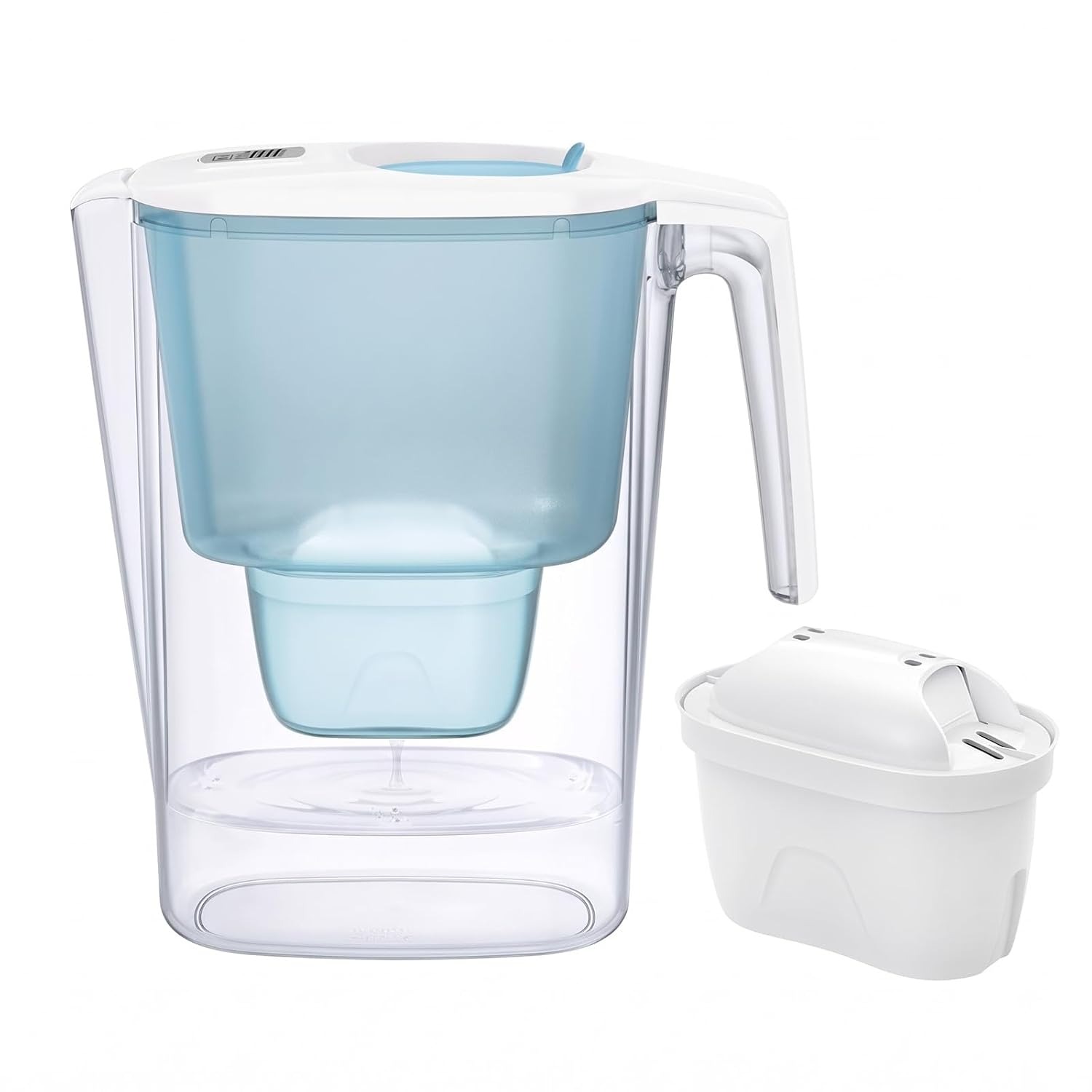
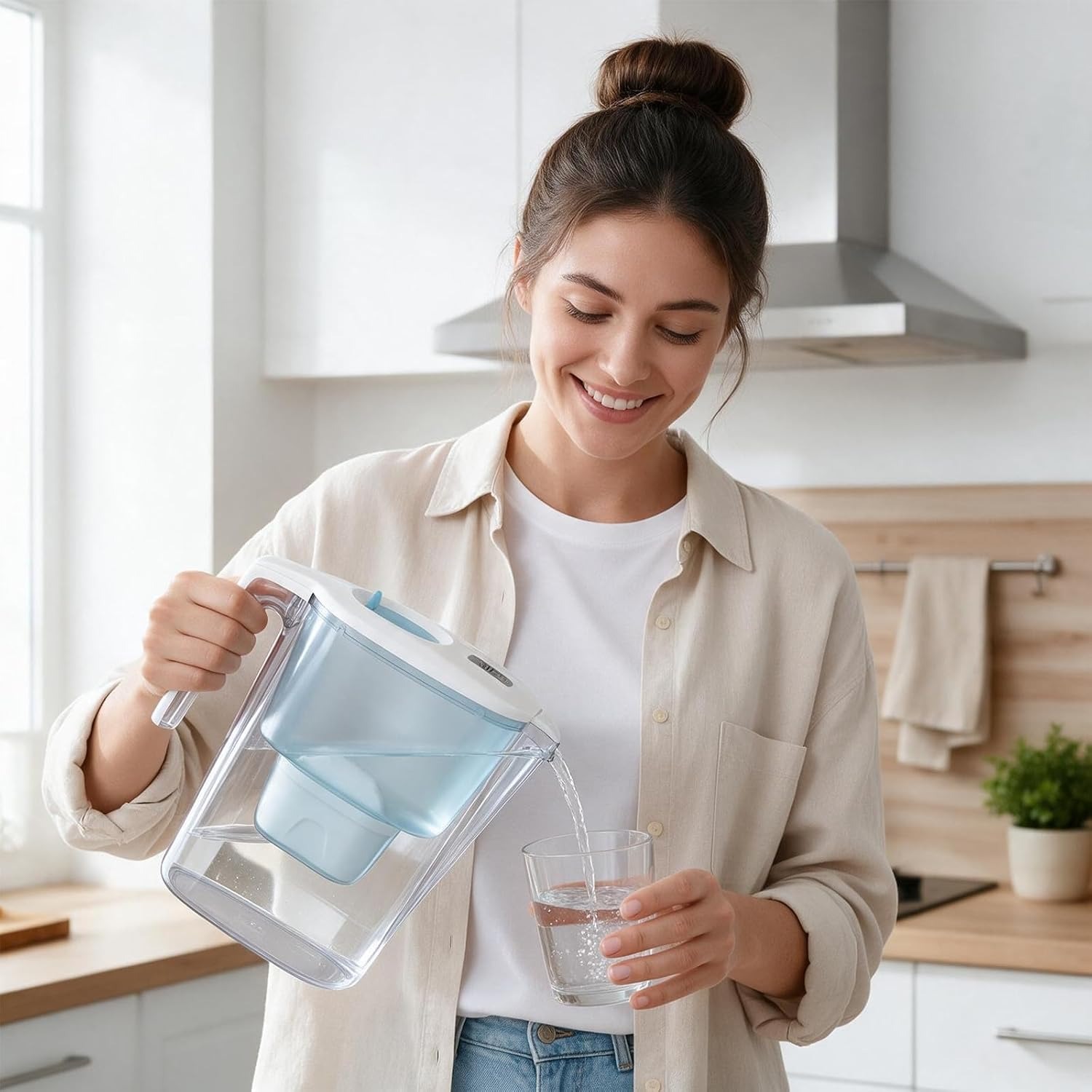
The mechanics are refreshingly simple. The jug has two parts stacked inside one body. You pour tap water into the upper reservoir. Gravity pulls it down through a filter cartridge, and the filtered water collects in the lower chamber where the spout is. You pour from the bottom chamber, refill the top, and repeat.
This jug uses an activated carbon cartridge. Carbon has an enormous amount of internal surface area, which is why it is the standard choice in this category. As water moves through it, the carbon holds onto the compounds that cause chlorine taste and odours, and the cartridge also catches sediment on the way. The cartridge is designed to reduce those things. It is not a purifier, and it should only be used with drinkable mains (town) water.
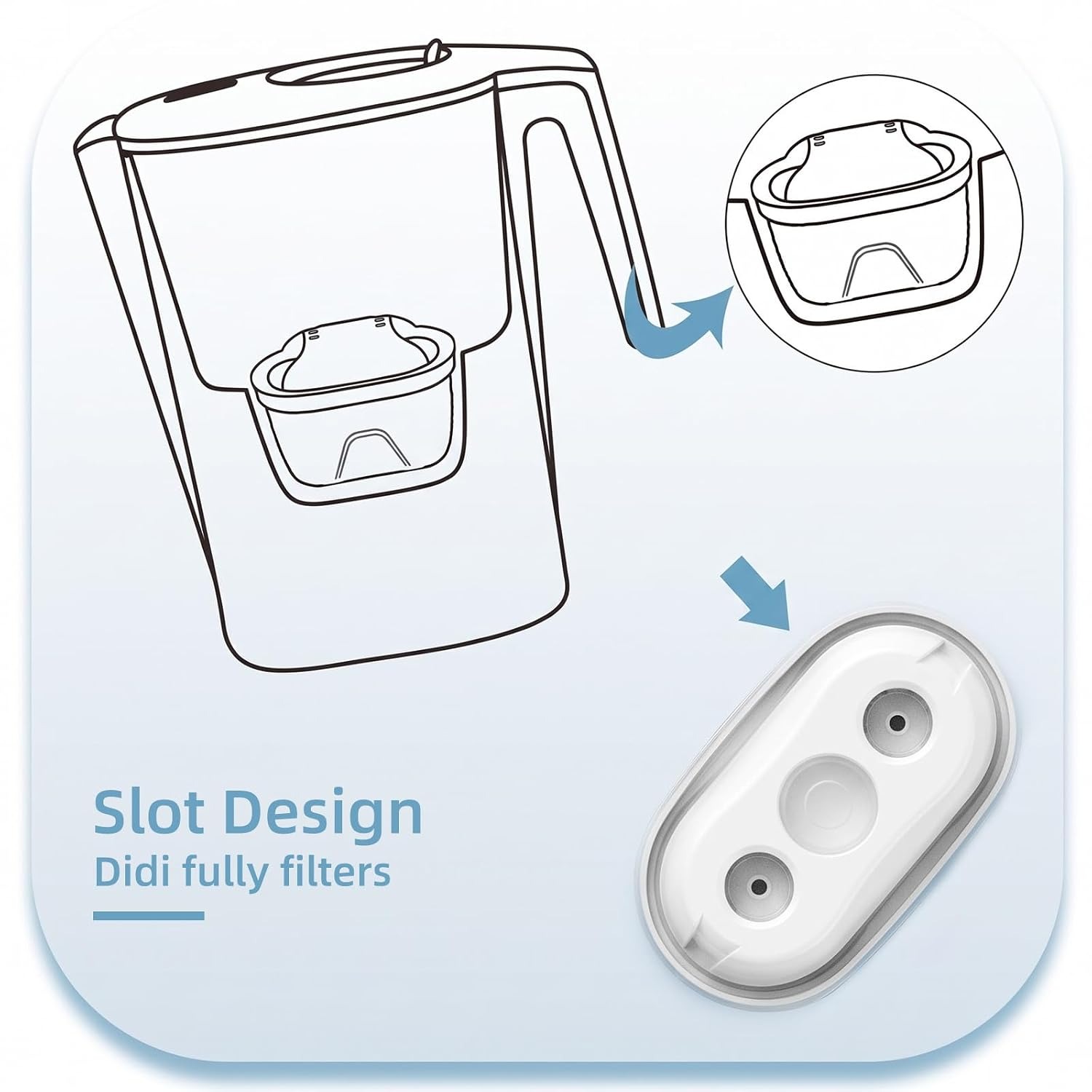
One detail worth knowing is the baffle-slot seal. In a jug without a proper seal, some water can slip around the edge of the cartridge instead of going through it, which quietly undermines the whole exercise. The seal here directs water through the cartridge before it reaches the lower reservoir, so the glass you pour has actually been filtered.
Why 3.6 litres matters more than you think
Capacity is the single most common regret with filter jugs. People buy a small one, discover it needs refilling after two glasses, and gradually stop bothering. A jug that lives on the bench and gets used every day beats a clever jug that gets shoved behind the kettle.
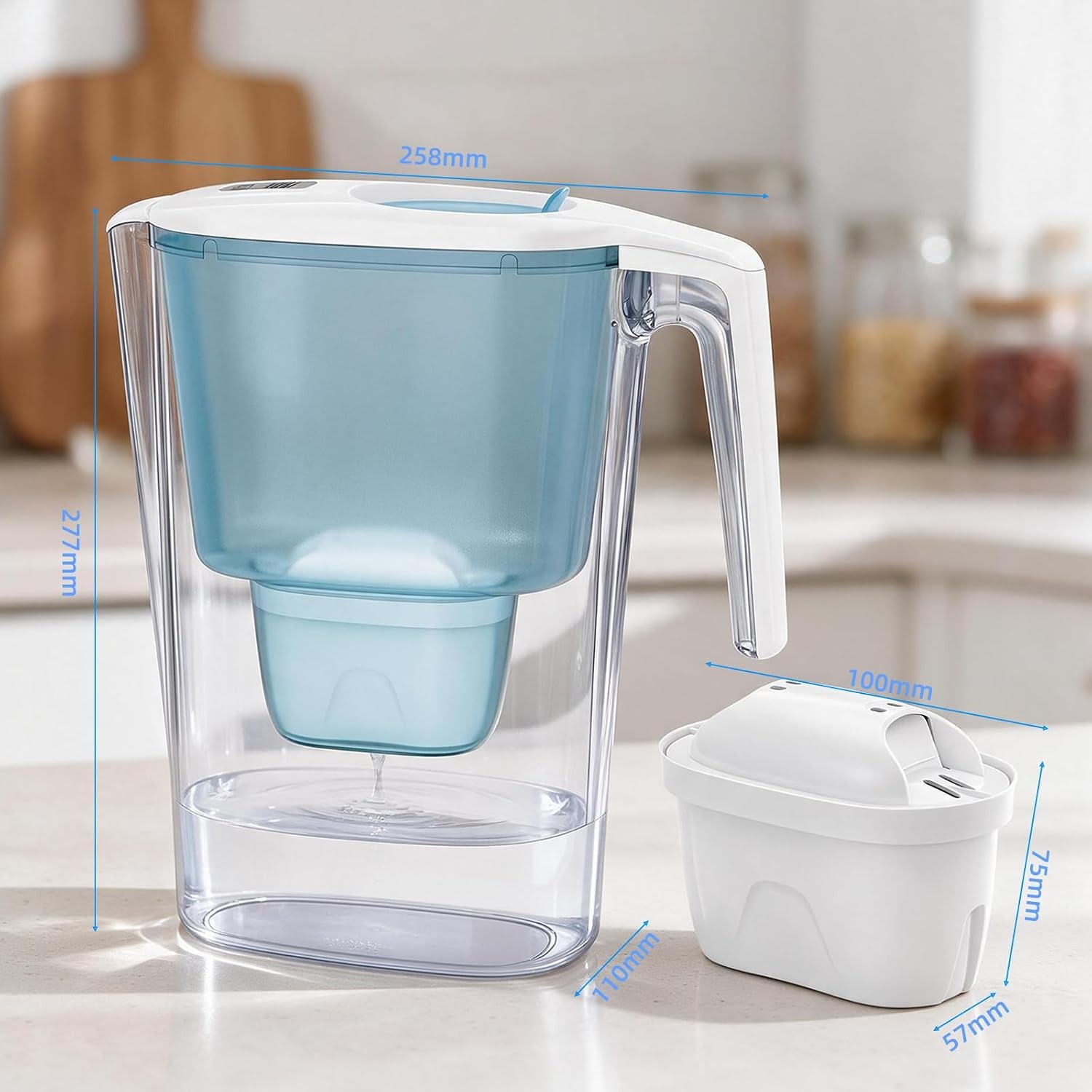
At 3.6 litres total, this one sits in the practical zone for a household. It covers a dinner table, fills a couple of drink bottles for the morning, and still leaves something cold in the fridge. For one or two people it is generous. For a family of four it means refilling once or twice a day rather than every twenty minutes.
Bear in mind that total capacity includes the upper reservoir, so the filtered water waiting in the lower chamber is a portion of that while a batch is still working its way through. The usual habit is to top up the reservoir each time you pour, which keeps a steady supply ready.
The small things that decide whether you keep using it
Filter jugs live or die on daily friction. Two features on this one cut that down.
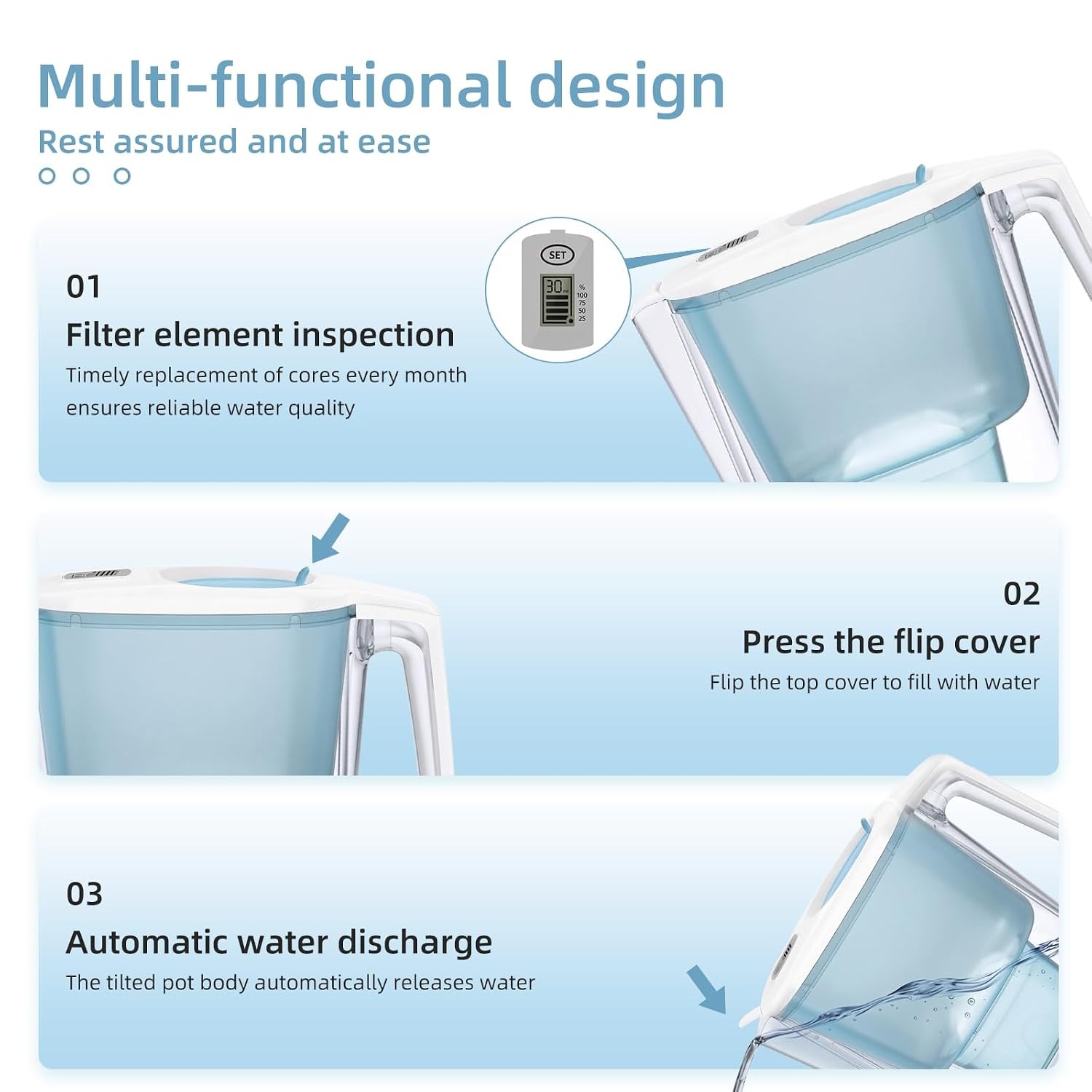
The first is the flip-top lid. You do not have to take the lid off to refill, which means no wet lid sitting on the bench and no fiddling with one hand while the tap runs. You tip the flap, fill, and you are done.
The second is that the lid opens on its own as you tilt the jug to pour. Plenty of jugs make you hold a button down while pouring, which is awkward when the jug is full and heavy. Here the pouring motion does the work.
The third helpful touch is the change filter indicator on the lid. Nobody genuinely remembers when they last swapped a cartridge. Having a visual cue in the place you look every day is far more reliable than good intentions.
Who this suits
Renters and share houses get the most obvious benefit, because there is nothing to install and nothing to leave behind. The jug packs into a box and works identically in the next kitchen.
Families with kids find that a bigger jug of cold, better-tasting water in the fridge nudges everyone toward drinking more water and less of the sweet stuff. Small children will struggle to lift a full 3.6 litre jug, so a half fill works better for them.
Small offices and studios do well with one too, provided someone takes charge of the monthly cartridge change. It is the kind of shared task that drifts if nobody owns it.
People who have been buying bottled water purely for the taste are the other obvious group. If chlorine flavour is the reason you are not drinking from the tap, a filter jug addresses it directly.
Who should look at something else
If your water comes from a tank, a bore, a creek or any supply that is not treated drinking water, this is not the product for you. It is designed for drinkable mains supply, not for making unsafe water safe.
If you are trying to address a specific contaminant you have been told about, you need advice from your water supplier and a system designed for that job. We make no claims about anything beyond chlorine taste, sediment and odours, because those are the maker's details.
And if you want filtered water instantly on demand at high volume, an under-sink or tap-mounted system is a better match. A gravity jug works in batches, by design.
Living with it day to day
Set it up by rinsing the new cartridge under the tap first. This clears loose carbon dust. Fit it, run a jug or two of water through and tip that water out, then you are ready. After that the routine is just fill, wait, pour.
Keep the jug in the fridge if you like cold water, or on the bench if you prefer it at room temperature. Treat the filtered water like any drinking water in your fridge, which means covered, and refreshed regularly rather than left for days.
Cleaning and cartridge changes
Hand wash the jug, lid and reservoir in warm water with a little mild detergent, then rinse well and leave the parts to air dry. Skip abrasive scourers and bleach, and keep the cartridge out of the dishwasher and away from hot water. A weekly wash is a sensible rhythm, more often in summer.
The maker advises replacing the cartridge monthly. That is the schedule to follow if you want the taste improvement to stay consistent. When the indicator on the lid tells you it is time, swap it, rinse the new one, and discard the first batch of water as you did at the start.
Buying a couple of spare cartridges at once saves you the gap between noticing and replacing. Keep your original cartridge as a reference when shopping for spares, since compatibility details are not listed by the maker.
What to compare when you shop
If you are weighing up options, look at four things. Capacity, because too small is the most common complaint. Lid design, because a lid you have to wrestle with every day will wear thin. A clear reminder system for cartridge changes, because memory is not a system. And honest, specific claims, because anything promising purified or perfectly clean water from a gravity jug is overselling.
The short version
This is a 3.6 litre water filter jug with an activated carbon cartridge, made from BPA-free plastic and weighing 1.2 kg empty. The cartridge is designed to reduce chlorine taste, sediment and odours in drinkable mains water, and the maker advises changing it monthly. A flip-top lid lets you refill under the tap and opens by itself as you pour, and an indicator on the lid tracks cartridge life. One cartridge comes in the box.
If tap water at your place tastes of chlorine and you want a fix that needs no tools and no plumber, this does the job with a minimum of fuss.