


The complete guide
Under Sink Water Filters, A Practical Buyer's Guide
The glass of water problem
You notice it at the kettle, or in a glass of water left on the bench for an hour. A faint swimming-pool smell. A flatness in tea and coffee. For a lot of households this is the thing that pushes them towards bottled water or a jug filter in the fridge, neither of which is much fun. Jugs need refilling constantly, they take up a shelf, and somebody always leaves one empty.
An under sink water filter takes a different approach. The hardware goes in the cupboard where you never see it, and a small dedicated tap appears at the sink next to your mixer. You turn it on, you fill a glass, and the water has already passed through the filter on the way. No refilling, no waiting, no fridge real estate.
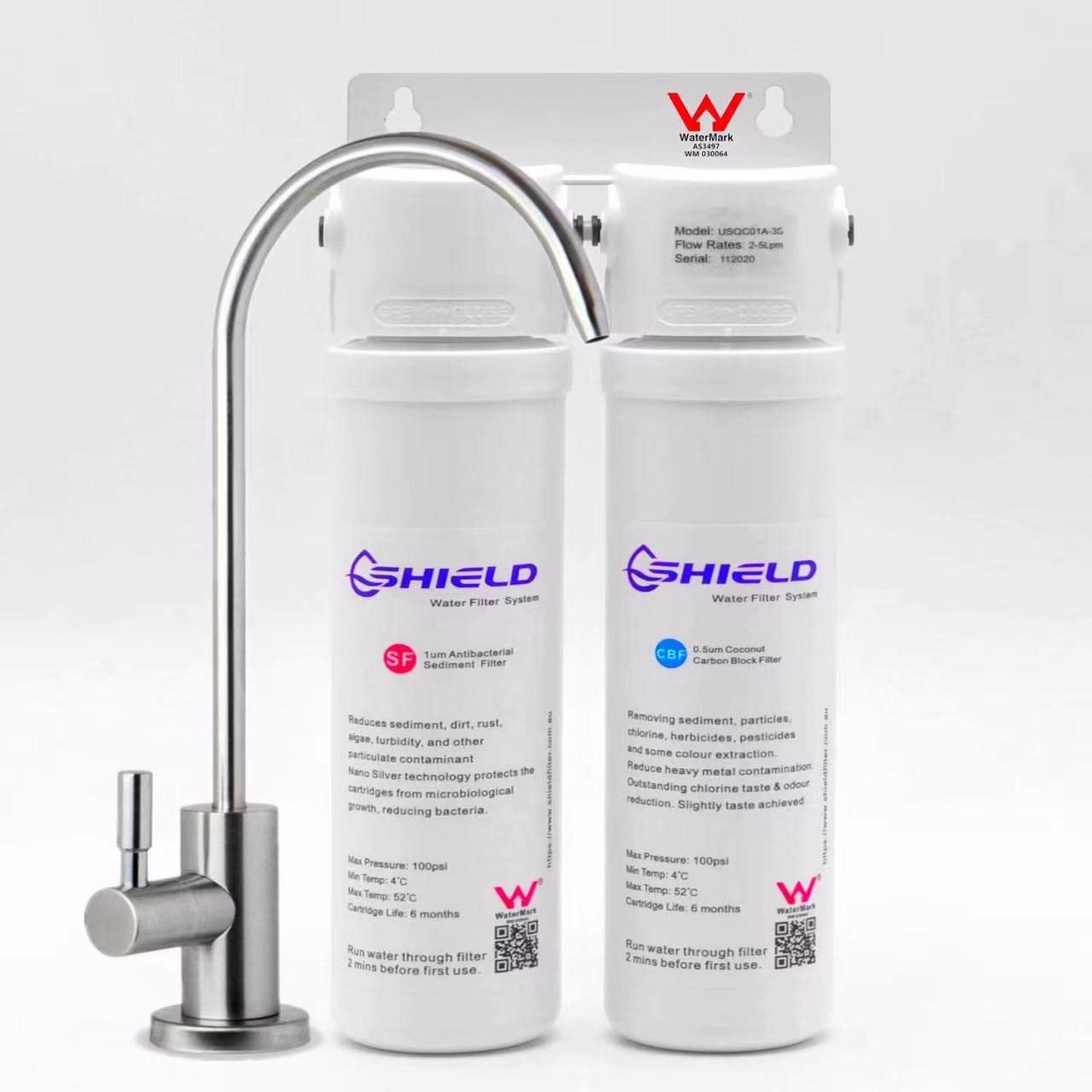
This particular unit is a twin system, meaning two cartridges in series. It is designed to reduce sediment and to reduce chlorine taste and odour in mains water. That is the honest scope of it, and it is worth being clear on that before going further.
How a two stage system works
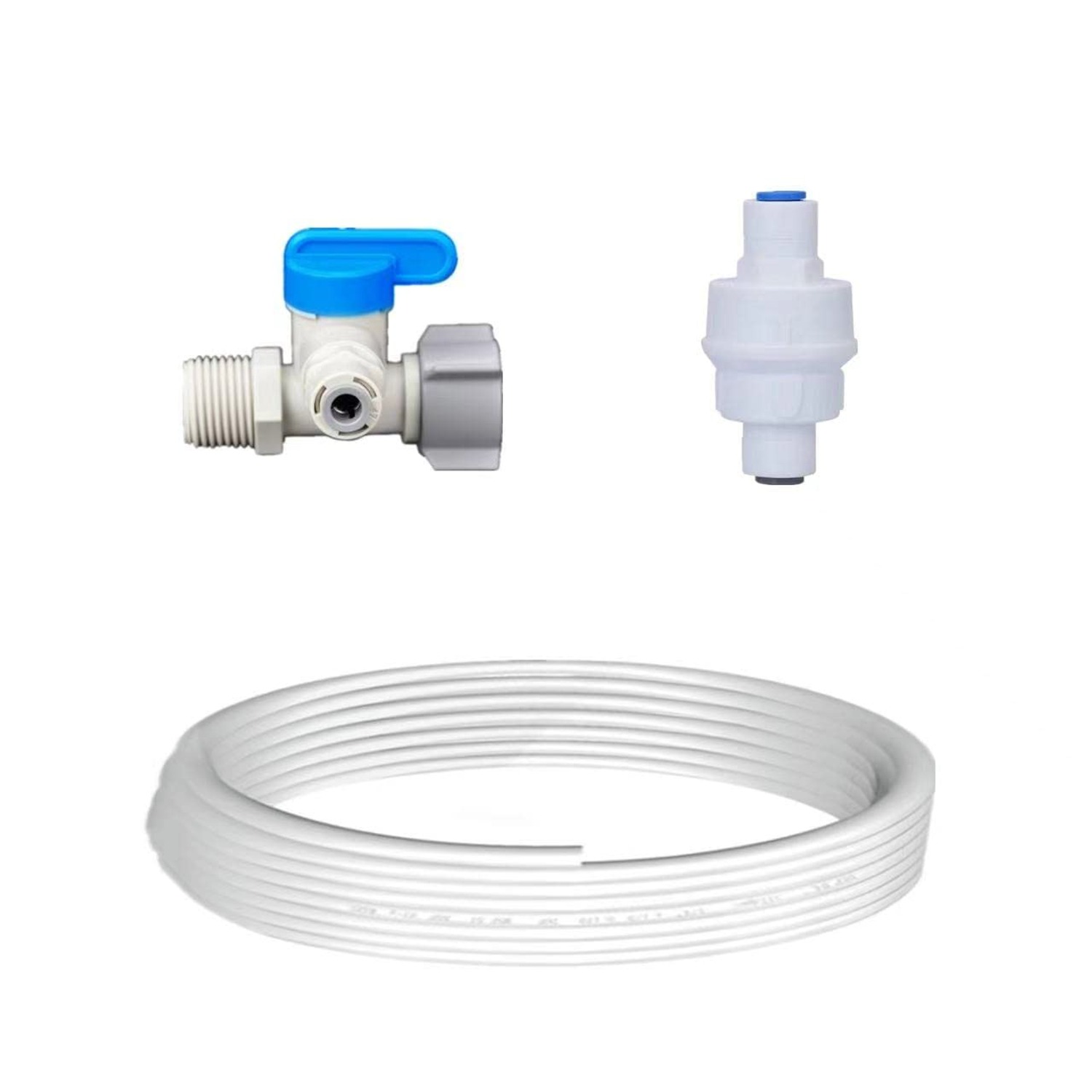
Water comes off the cold mains line under your sink through a tee valve. The plumber fits that tee, and it also acts as the shut-off when you want to change cartridges. From there the water travels through a pressure-limiting valve, which keeps incoming pressure in a sensible range, because mains pressure can be higher in some streets than others.
Then it reaches the filter body itself. Stage one is a sediment cartridge. This catches grit and cloudy material that can show up in pipes, particularly after mains work in the street or a sudden pressure change. Catching it here matters for two reasons. It takes the visible stuff out, and it stops that material from loading up the next cartridge early.
Stage two is a carbon block. This is the stage people really notice, because carbon is what works on chlorine taste and odour. Water moves through the dense block of carbon slowly enough for that to happen, then exits to a length of tubing that runs up to the filter tap on the bench.
From there it is simply a tap. Your main mixer carries on running ordinary mains water at full pressure, completely untouched. The filter tap is for drinking water, cooking water and filling the kettle.
Who this suits
Households that drink a lot of tap water and are not thrilled with the taste are the obvious fit. If you find yourself buying bottled water out of habit, or if the jug filter has become a daily chore, a plumbed-in unit removes the whole routine.
It also suits people who want their bench clear. The unit is 14 cm wide, 7 cm deep and 30 cm high, and weighs 1.37 kg, so it mounts on the cupboard wall and keeps the floor of the cupboard free for bins, cloths and cleaning gear. Compared to a bench-top filter it disappears entirely.
It is less suited to anyone who cannot have plumbing work done. Renters in particular should check with the landlord first, because fitting this involves a tee into the mains line and drilling a tap hole in the bench or sink. That is not a job you quietly undo on moving day.
And if you are on tank or bore water, this is not your product. It is for use with drinkable mains (town) water.
Installation, and why it matters
This system connects to mains plumbing. In Australia that means a licensed plumber must install it. I will say it again because it is the single most common thing people get wrong when shopping for the best under sink water filter: book a licensed plumber.
There are three reasons it is worth doing properly. The tee valve has to be made onto a live mains line. The pressure-limiting valve has to go in the right place and the right way around. And the tap hole in the bench or sink has to be drilled and sealed cleanly, which is easy to get wrong on a stone benchtop and expensive to fix.
The upside is that the kit is complete. Tee valve, pressure-limiting valve, filter tap, tubing and both cartridges are all in the box. The connection is 1/2 inch BSP, the common size under Australian kitchen sinks, so most jobs are straightforward. The product carries a WaterMark certification to AS/NZS 3497 as stated by the maker, which is the certification your plumber will expect to see for a plumbed-in product.
Before the plumber arrives, do three things. Measure for about 30 cm of clear vertical space on a cupboard wall. Check the supply line size. Decide where you want the filter tap to sit, allowing room for your hand and for a tall jug.
Choosing between filter types
If you are comparing options, the main choice is bench-top versus plumbed-in. A bench-top unit sits on the sink and needs no plumber, but it occupies the one part of the kitchen you want empty. A jug sits in the fridge and needs constant refilling. A plumbed-in under sink unit costs more up front and needs a tradesperson, then does its job quietly for years.
Within plumbed-in units, the question is how many stages. Single-stage systems use one cartridge for everything. A twin system splits the work, which is the sensible arrangement if your water carries any sediment at all. People looking for the best twin water filter system are usually after exactly that split, sediment first then carbon.
The other practical difference is the cartridge style. Older housings need a spanner and a steady bucket. Quick-change twist cartridges like these come out by hand. If you have ever wrestled with a stuck filter housing on a Sunday morning, that difference is worth real money.
Living with it
Maintenance is one job a year for most households. The maker rates the cartridges for up to 12 months or 4,500 litres, whichever comes first. That figure moves depending on how much water your household gets through and what the incoming supply is like. A family of five will reach the litre mark sooner than a couple.
Changing them goes like this. Shut off the feed at the tee valve, twist the spent cartridges out, twist the new ones in, open the valve and run the filter tap for several minutes. The first water out may look cloudy or carry fine dark specks from the carbon. That is normal and clears with flushing.
Write the install date on the housing with a marker. It takes five seconds and saves the annual argument about whether you changed them last autumn or the one before. Keep a spare set in the cupboard so a change never waits on a delivery.
Day to day, wipe the housings with a damp cloth if they get dusty. Skip solvents and abrasives on the plastic. If the system has been standing unused for a while, after a holiday for example, run the filter tap for a minute or two before you drink from it.
The short version
A twin under sink water filter puts two cartridges between the mains line and a dedicated drinking tap. Sediment first, carbon block second, designed to reduce sediment and chlorine taste and odour in mains water. The kit includes the tee valve, pressure-limiting valve, tap, tubing and both cartridges, fits 1/2 inch BSP plumbing, and takes up a 14 cm by 7 cm by 30 cm patch of cupboard wall.
Cartridges are quick-change and rated for up to 12 months or 4,500 litres. Use it with drinkable mains water, and keep to the replacement schedule.
And the part worth remembering above all else: a licensed plumber installs it. Measure your cupboard, check your line size, then book the job.