

The complete guide
Gravity Water Filters, A Practical Buyer's Guide
The problem with the glass of water you just poured
Most mains water in town is fine to drink. It still does not always taste like something you want to drink. Chlorine is the usual culprit, and on a warm day it can make a glass of water taste faintly like a public pool. After the water authority works on the pipes in your street you might also get a run of cloudy or rust-tinged water, with fine grit settling in the bottom of the jug.
The common fixes each have a catch. Bottled water means hauling heavy packs home and finding somewhere to put the empties. A filter jug holds about a litre and a half, which means refilling it constantly and waiting while the family gets through it. Under-sink systems work well but involve plumbing, a cupboard full of hardware and, if you rent, a landlord conversation you would rather not have.
A gravity fed water filter system sits in the middle of all that. It is a large container on your bench with filter elements inside, and nothing else. No cord, no tap connection, no installation.
How a gravity water filter actually works
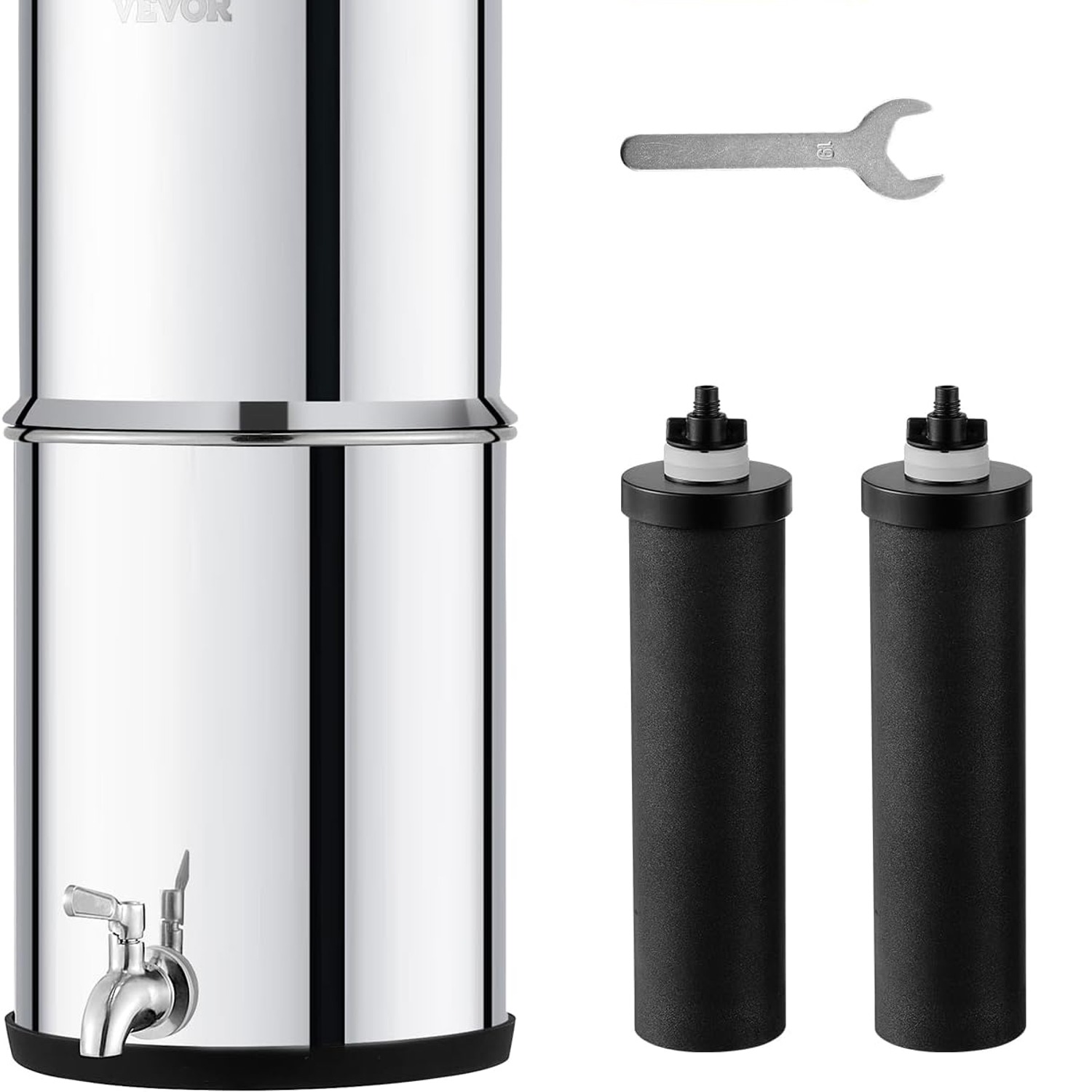
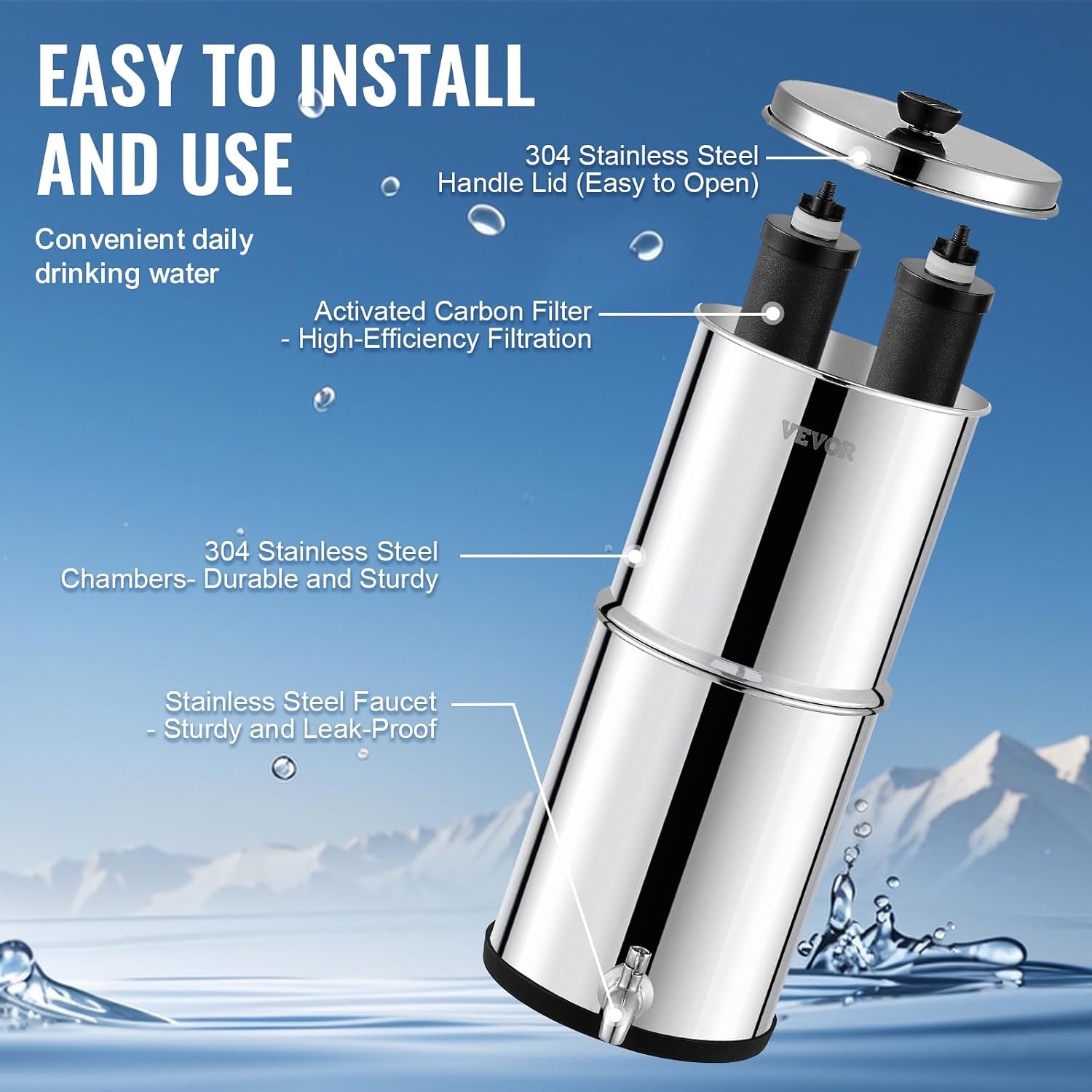
The design is about as simple as household equipment gets. There are two chambers. The upper one holds the water you pour in, and the filter elements are fitted through the floor of that chamber so they hang down into the chamber below. Water moves through the elements under its own weight and collects in the lower chamber, where a tap lets you draw it off a glass at a time.
In this system the elements are coconut-shell activated carbon, and there are two of them. Activated carbon has an enormous internal surface area, full of tiny pores. As water passes slowly through, certain substances stick to those surfaces instead of carrying on with the water. That is why carbon is the standard choice where taste and odour are the issue. These elements are designed to reduce chlorine taste, sediment and rust particles.
Slowness is part of the deal. Gravity is gentle, so water takes its time passing through the carbon. That is not a fault, it is how contact filtration works. In practice you fill the top chamber, go and do something else, and come back to a lower chamber with water waiting in it. The 8.5 litre capacity is what makes that work. A filter jug would have you standing at the sink.
One thing worth being clear about from the start. Use this with drinkable mains (town) water. It is built to improve the taste and clarity of water that is already fit to drink. It is not a treatment system for water of unknown origin, and you should not treat it as one.
Who this kind of filter suits
Renters and share houses. Nothing is drilled and nothing is plumbed. When the lease ends you pick it up and take it with you, and there is no hole in the benchtop to explain. This is the single biggest reason people go looking for the best water filter without plumbing.
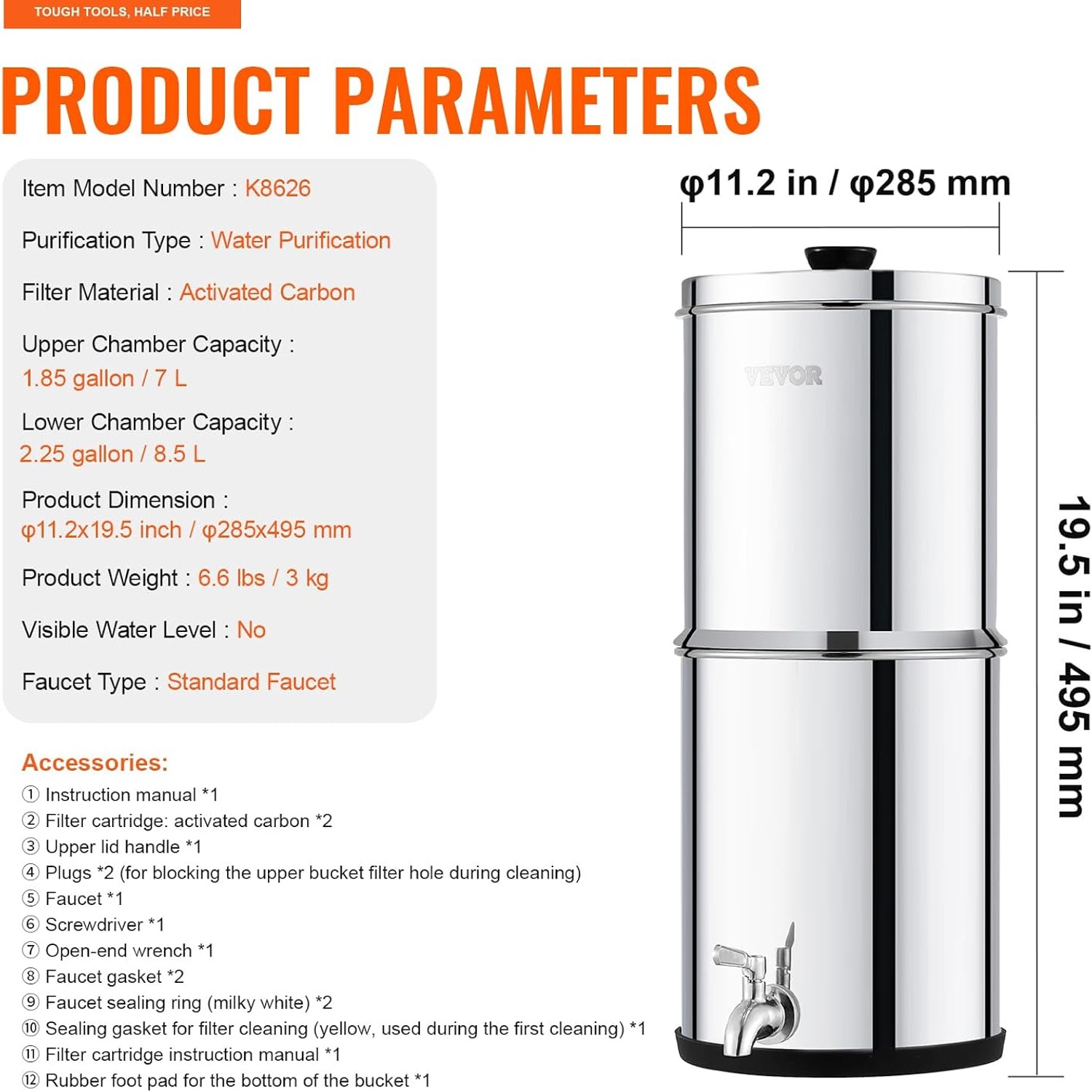
Small kitchens. It takes a footprint of 28.5 cm, a little more than a dinner plate. That is a reasonable trade for not giving up a whole sink cupboard to tanks and hoses.
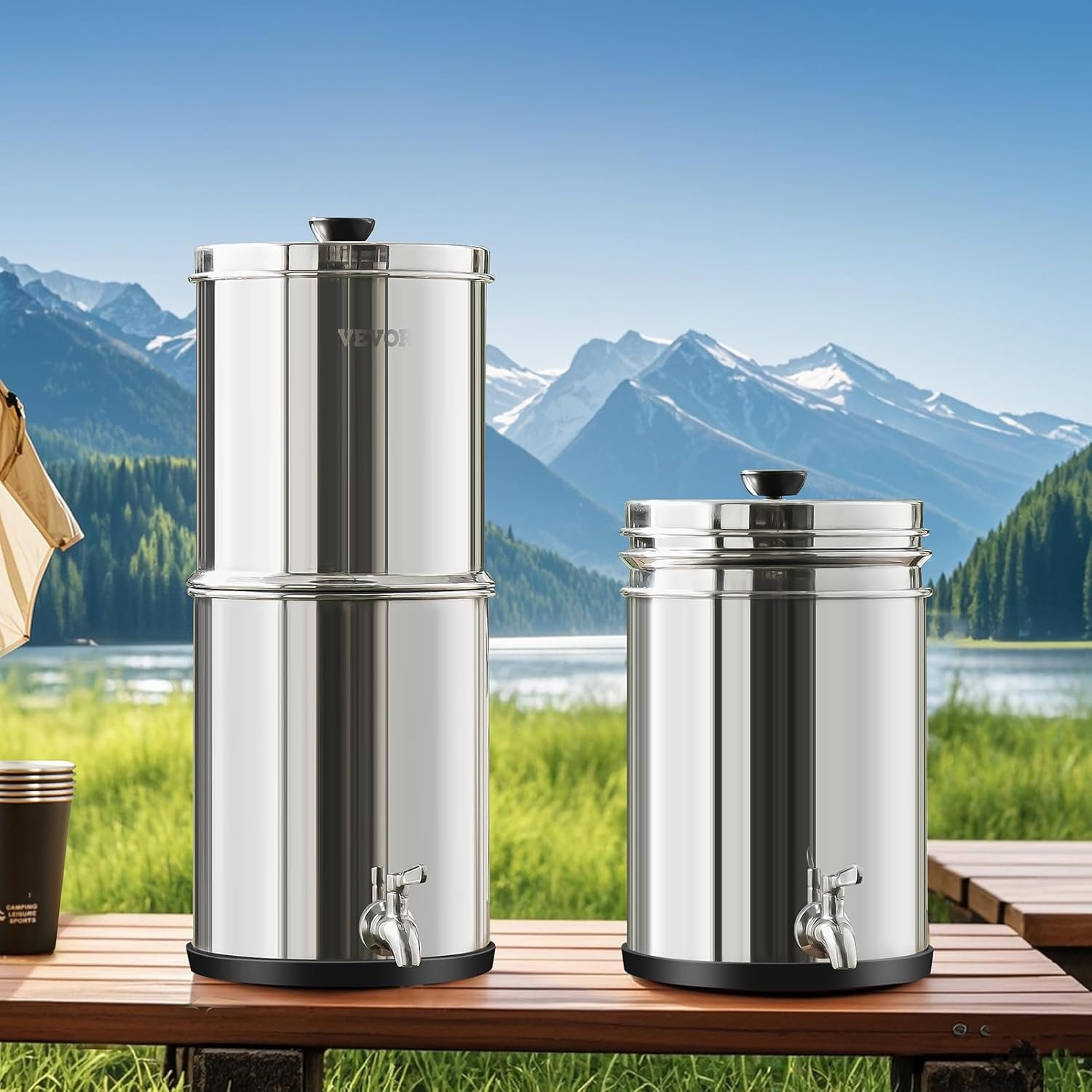
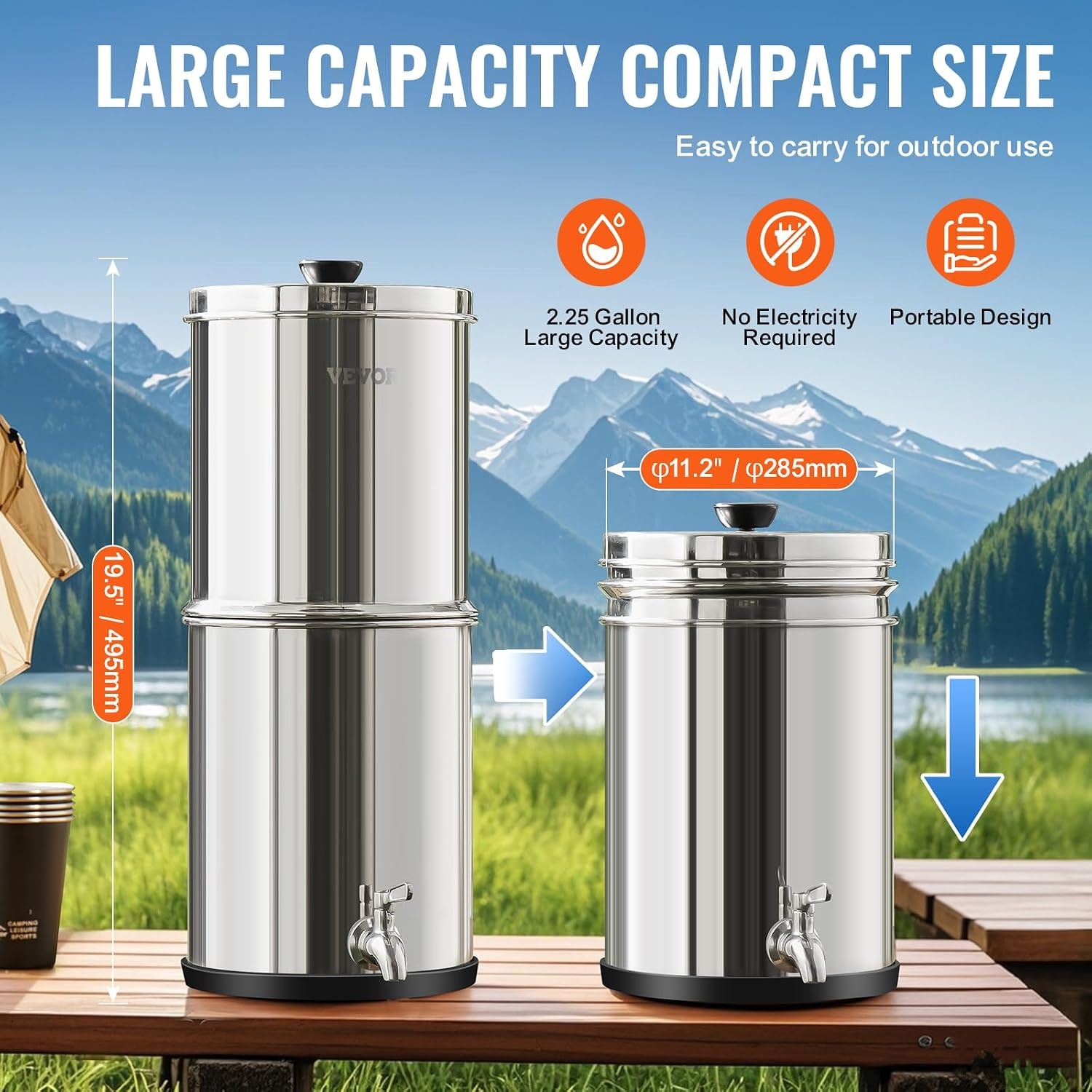
Caravans, camping and holiday places. The upper chamber nests inside the lower one, so the whole system collapses into a single stainless steel cylinder for the drive. If you are weighing up the best caravan water filter options, a gravity unit with no pump and no power draw is hard to argue with.
Homes that lose power. Nothing about it stops working in a blackout. If the water is still running you can still filter it.
Offices and workshops. Somewhere with a kettle but no plumbed filter is the natural home for one of these. It is a common pick for the best office water filter because anybody can refill it without a manual.
Sizing it up before you buy
The two numbers to write down are 28.5 cm diameter and 49.5 cm high. The height is the one that catches people out. Standard overhead cupboards sit roughly 50 cm above the benchtop in a lot of kitchens, which means an assembled unit at 49.5 cm might technically squeeze in but leave you no room to lift the lid for refilling. Get the tape measure out first.
If the clearance is tight, there are two easy answers. Put it at the end of the bench where there is no cupboard above, or stand it on a sideboard or trolley nearby. It does not need to live next to the sink. You only carry water to it, not from it.
Also think about the tap. It needs to overhang the bench edge so a glass fits underneath, or you need a small tray or stand to raise it. A lot of people simply slide a chopping board under the back of the unit so the tap clears the edge.
Weight is modest at 3 kg empty, so moving it around is easy enough. Full, it is a different story, because 8.5 litres of water adds up fast. Fill it where it is going to live.
Capacity and how often you will be refilling
The maker suggests one to four people. In real life, a couple who drink water, make tea and fill a few bottles for work will go through most of a chamber over a day. A family of four will likely fill it in the morning and again after dinner.
If you are buying for one person, you will refill every day or two and still have plenty in reserve. If you have five or six people in the house, you will be topping it up more often, so work out whether that suits your routine. Some larger households simply fill it whenever they walk past the sink, which keeps it full without anyone thinking about it.
A small habit helps here. Pour fresh water in as soon as the top chamber empties rather than waiting until the bottom one runs dry. That way there is always filtered water ready and you never stand around waiting.
Looking after it
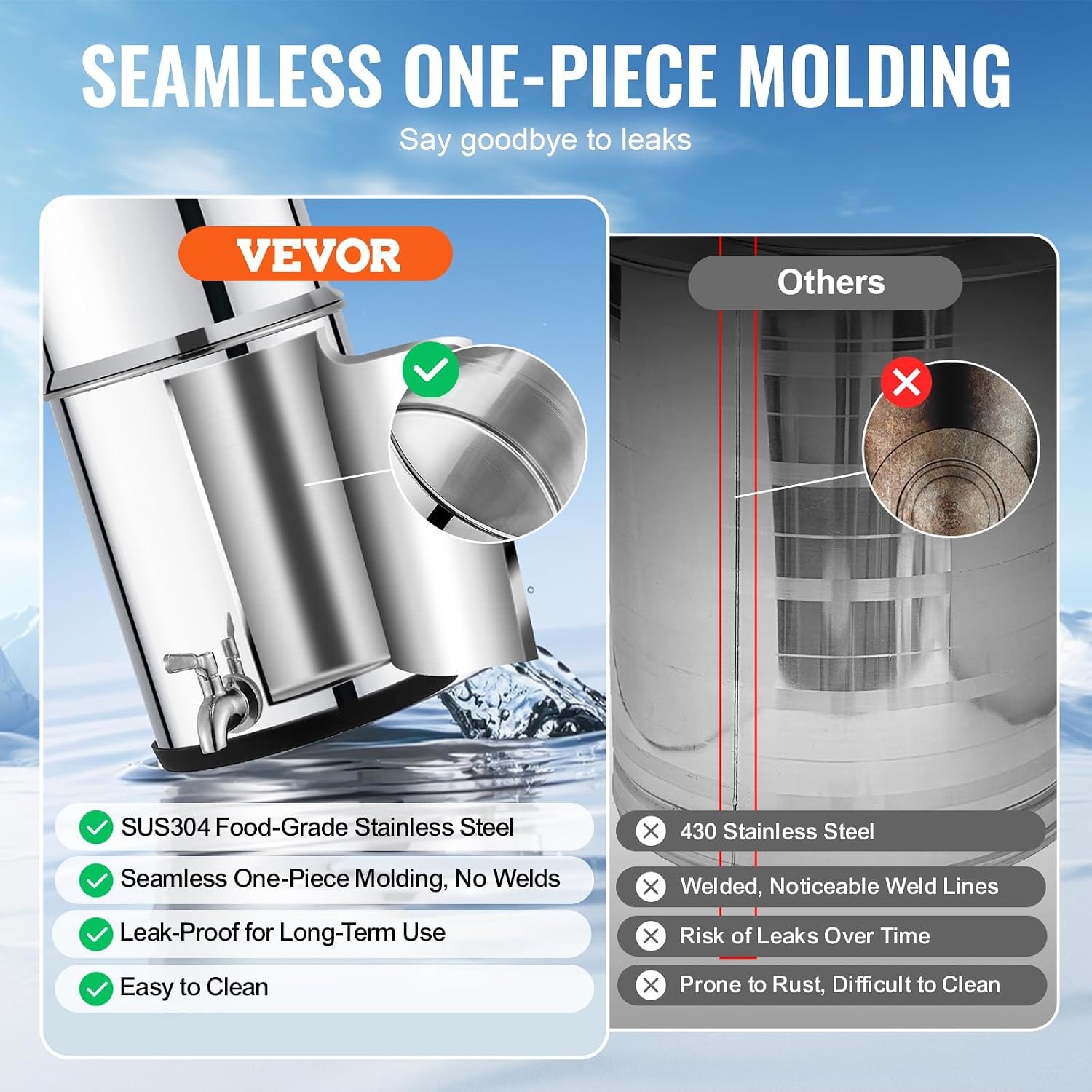
Stainless steel is forgiving, but a bit of care keeps it looking sharp. Wash the chambers and the tap in warm water with a mild detergent before the first use and again each time you change the elements. Rinse properly and dry with a soft cloth, because air-drying can leave water marks on the steel. Skip bleach, steel wool and gritty scourers, which scratch the finish.
The filter elements are the part that needs a diary note. They are replaceable, and the instructions that come with your unit give the replacement schedule. Stick to it. A carbon element that has done its work is no longer doing much, and the only way to know is the calendar, not the taste. If you want the best replaceable carbon filter elements experience, write the change date on a bit of tape and stick it on the back of the unit.
Going away? Empty the lower chamber, dry both halves, and store it nested or with the lid off. Water should not sit in there for a fortnight while you are at the beach.
The short version
This is a benchtop gravity water filter in 304 stainless steel that holds about 8.5 litres and runs on nothing but gravity. Two coconut-shell activated carbon elements are designed to reduce chlorine taste, sediment and rust particles from drinkable mains water, and they can be replaced when they reach the end of their service life. A stainless steel tap and fittings are included.
It makes sense if you want better-tasting water without plumbing, without a power point, and without being locked into one house. Measure your bench clearance against the 49.5 cm height, decide whether 8.5 litres covers your household, and keep to the element replacement schedule. Do those three things and it will quietly get on with the job.