

The complete guide
Countertop Reverse Osmosis Buyer's Guide, How Benchtop RO Filters Work and Who They Suit
The problem with filtered water at home
Most people arrive at this product after trying the easier options first. A filter jug in the fridge works, until it is empty every time you want a drink and someone keeps putting it back with 2 cm in the bottom. A tap-mounted filter helps, but it changes how the tap feels and it does nothing while you are filling a bottle in a hurry. Bottled water is a chore to carry and store.
The next step up is usually a proper reverse osmosis system, and that is where it stops for a lot of households. Under-sink RO means cutting into the cold water line, fitting a drain saddle and drilling a hole through the benchtop for a separate tap. If you rent, you cannot do that. If your sink cabinet already has a bin, a water meter and the cleaning cupboard crammed in, there is nowhere to put a tank. If you are not confident with plumbing, you are booking a tradesperson for a half-day job.
A countertop reverse osmosis water filter is the way around that. It is the same type of filtration, packaged into a unit that stands on the bench and runs off a power point.
How a benchtop reverse osmosis system works
Water goes in the feed tank at the top. It then moves through five stages before it reaches the pure water tank.
The first stage is a stainless steel filter mesh, which is a physical screen for the larger material. Second is a 5 micron PP sediment filter, a finer barrier for smaller particles. Third is activated carbon, which is the stage designed to reduce chlorine taste and odour, and in practice that is the change most people notice in the glass. Fourth is the reverse osmosis membrane itself, the stage that defines this type of system. Fifth is a UV light stage, and the panel shows you whether it is operating.
RO systems split the water you put in. Some comes through as filtered water, the rest is sent to waste. This unit runs a 4 to 1 pure-to-drain ratio, so roughly four parts filtered to one part drain. You will empty a waste tank along with the drip tray, which is part of living with any RO unit, benchtop or plumbed.
The filtered water collects in a 2 litre pure water tank. That is the amount sitting ready at any moment. The unit tops it back up as you use it, so the practical capacity over a day is much higher than 2 litres.
Using it day to day
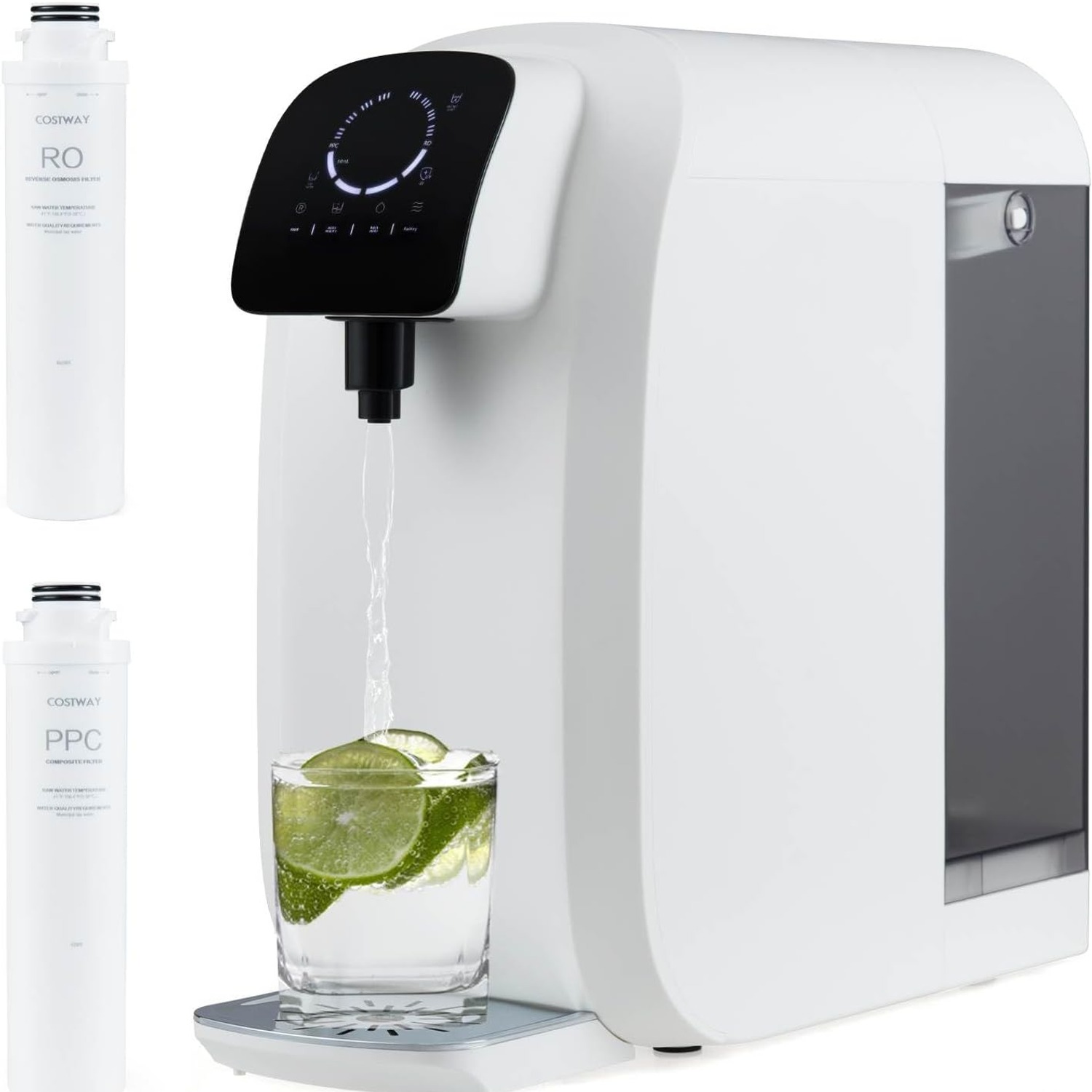
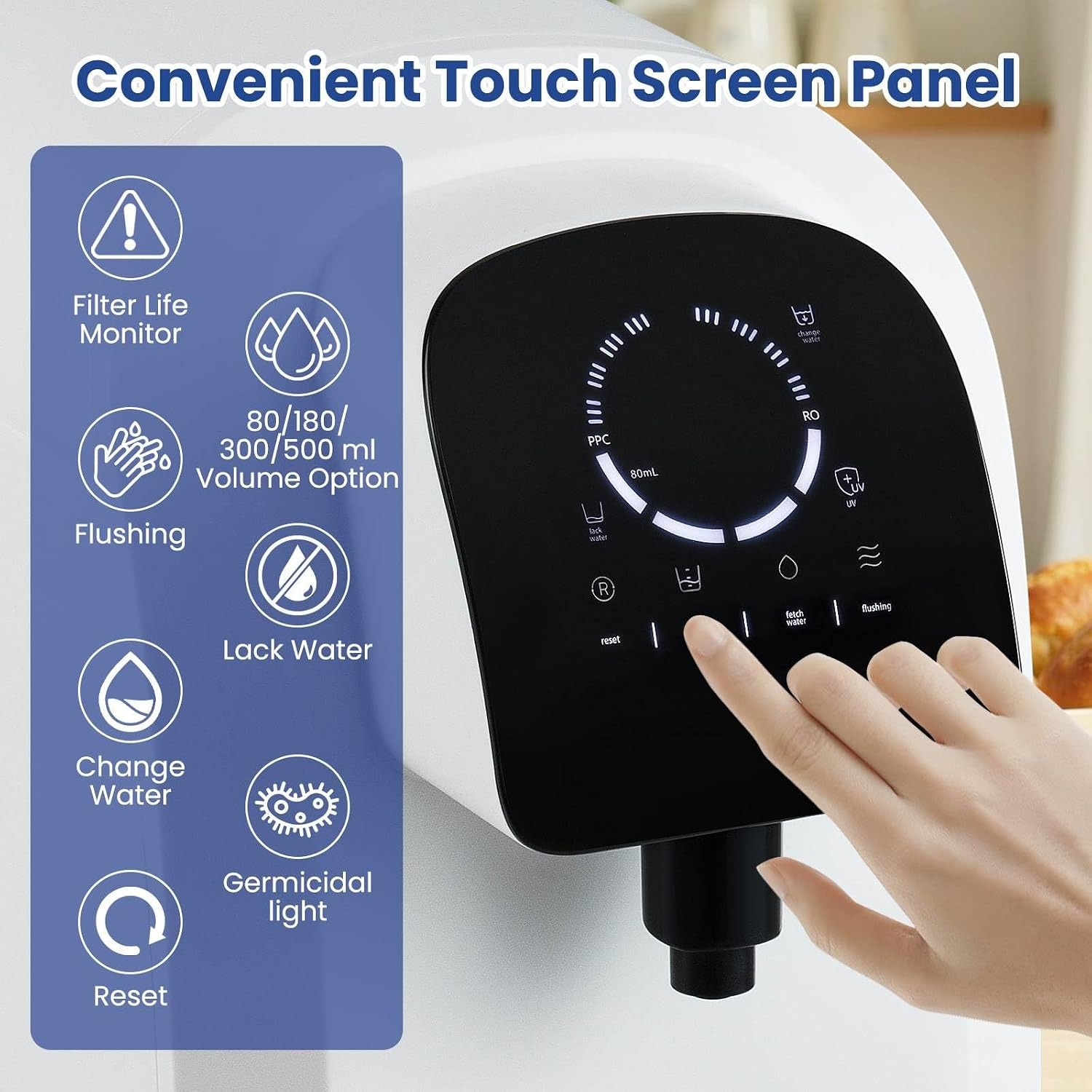
The touch panel is where everything happens. Four preset pour sizes cover most of what a kitchen needs. 80 ml is a splash or a top-up. 180 ml is about a cup of tea. 300 ml fills a standard glass. 500 ml handles most drink bottles without standing there holding a button.
The same panel carries the information you actually want. Filter life tells you where the cartridges are up to. Low water tells you the feed tank needs a refill before you reach for a glass and find nothing. Change water prompts you to refresh what is sitting in the tank. UV status shows whether that stage is running. There is also a flush function, which you use as the instructions direct, typically after a cartridge change.
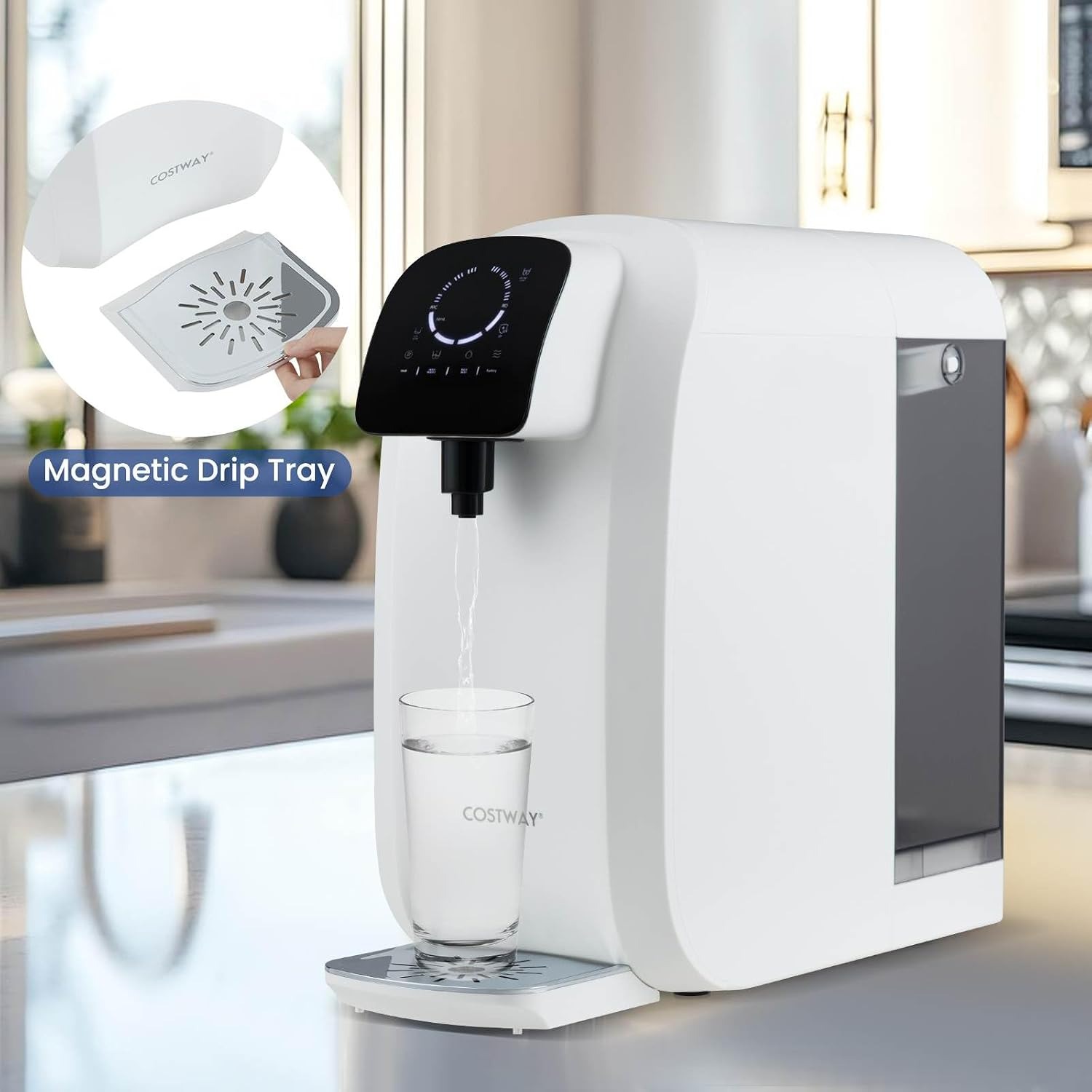
The drip tray is magnetic and lifts straight off. That sounds like a small thing until you have fought with a clip-in tray that cracks the third time you remove it.
Who this suits
Renters are the obvious group. Nothing is drilled, nothing is cut, nothing is attached to the plumbing, so there is no bond conversation and no need to ask permission. When the lease ends, you unplug it, empty the tanks and put it in a box.
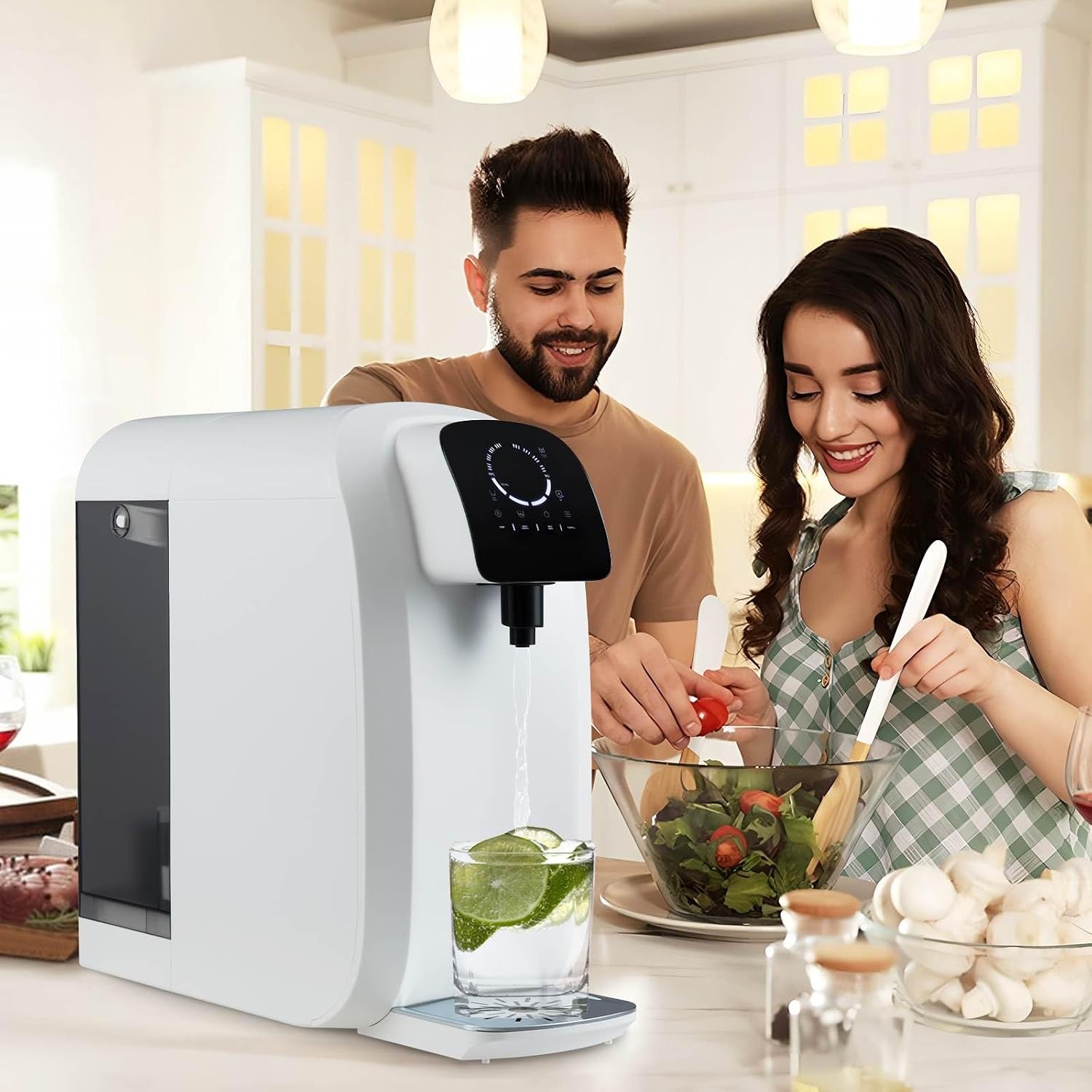
Small kitchens and apartments are the second group. The footprint is 19 cm by 19 cm, which is less bench space than a toaster. If you have been looking for the best water filter for apartments, the usual blocker is cabinet space under the sink, and this sidesteps it entirely.
Offices and share kitchens work too. One unit on the bench, a power point and someone keeping the feed tank filled covers a surprising number of people. The preset pour sizes stop the usual mess of someone leaving a tap running into a cup.
The people it suits least are households that go through very large volumes of water very quickly, and anyone who wants filtered water from the main kitchen tap itself. If you want to fill a stockpot from the filter, a benchtop tank system is not the right tool.
How to choose and what to measure
Three measurements decide whether this works in your kitchen.
Height first. The unit is 41 cm tall and you need clearance above the lid to pour water in. If your overhead cupboards sit 45 cm above the bench, you will be sliding the unit forward every refill, which gets old fast. Measure from the benchtop to the underside of the cupboard before you buy.
Bench depth second. 19 cm square is modest, but it still has to sit clear of the splashback with room to lift the lid and remove the drip tray.
Power third. The cord is 1.5 m and the unit is rated 100 to 240 V, 50/60 Hz at 30 W. Work out which power point it will use and make sure the cord does not have to cross a sink, a cooktop or a walkway.
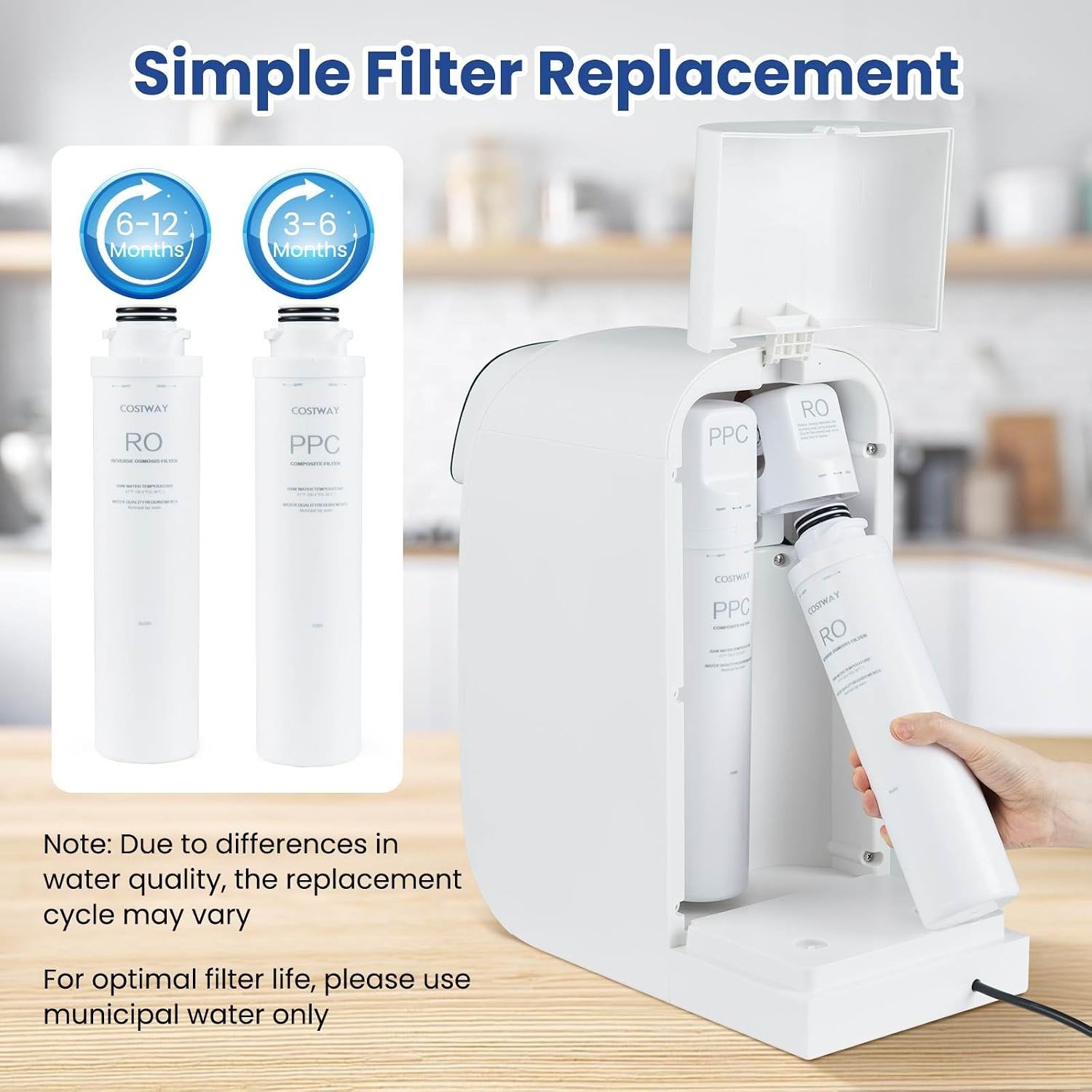
Then think about running costs over time. The maker rates the RO cartridge at 6 to 12 months and the PPC cartridge at 3 to 6 months. Those are ranges, not promises, and your actual life depends on how much water you run and what your local supply is like. Budget for cartridges the way you would for a coffee machine, as an ongoing item rather than a one-off.
Looking after it
Care is simple, and doing it regularly is what keeps the unit pleasant to use.
Wipe the housing with a soft damp cloth and dry it. Do not put any part of it in a dishwasher and do not hold the body under a running tap. Empty, rinse and refill the feed tank regularly rather than letting the same water sit for days. Lift the magnetic drip tray off when it fills and rinse it.
Change the cartridges when the filter life display prompts you, and run the flush function as the instructions describe afterwards. Changes are tool-free, a twist, lift and lock by hand, so there is no reason to put it off.
One more point worth repeating. This is for use with drinkable mains (town) water. It is not a treatment system for rainwater tanks, bores or any supply that is not already drinkable. If you are not sure about your supply, ask your local water authority before you rely on any filter.
The short version
If you want reverse osmosis filtration without a plumber, this is the format that makes it possible. Five stages, a 2 litre pure water tank, four preset pour sizes and a panel that tells you when it needs attention. It stands 19 cm by 19 cm and 41 cm tall, weighs 6 kg, and runs off a standard power point with a 1.5 m cord.
Measure your clearance, check your power point, and plan for cartridge changes at the intervals the maker gives. If those three things line up, a benchtop unit gets you filtered water on the bench without touching a single pipe.