

The complete guide
Caravan Water Filter Buyer's Guide, Better Tasting Water On The Road
The problem nobody mentions until the first cuppa
You can plan a trip down to the last fuel stop and still get caught by the water. Every town runs its supply a bit differently. Some places push through more chlorine than others. Some park mains sit half empty for weeks and the first few litres out of the tap carry a stale flavour. Add a bit of grit from an old standpipe and your morning coffee tastes like the hose it came through.
The water is usually fine as drinking water. That is not the issue. The issue is that it tastes nothing like what you have at home, and tea, coffee and drink bottles all carry that flavour for the rest of the week. Once it is in your tanks, you are stuck with it until you drain and refill.
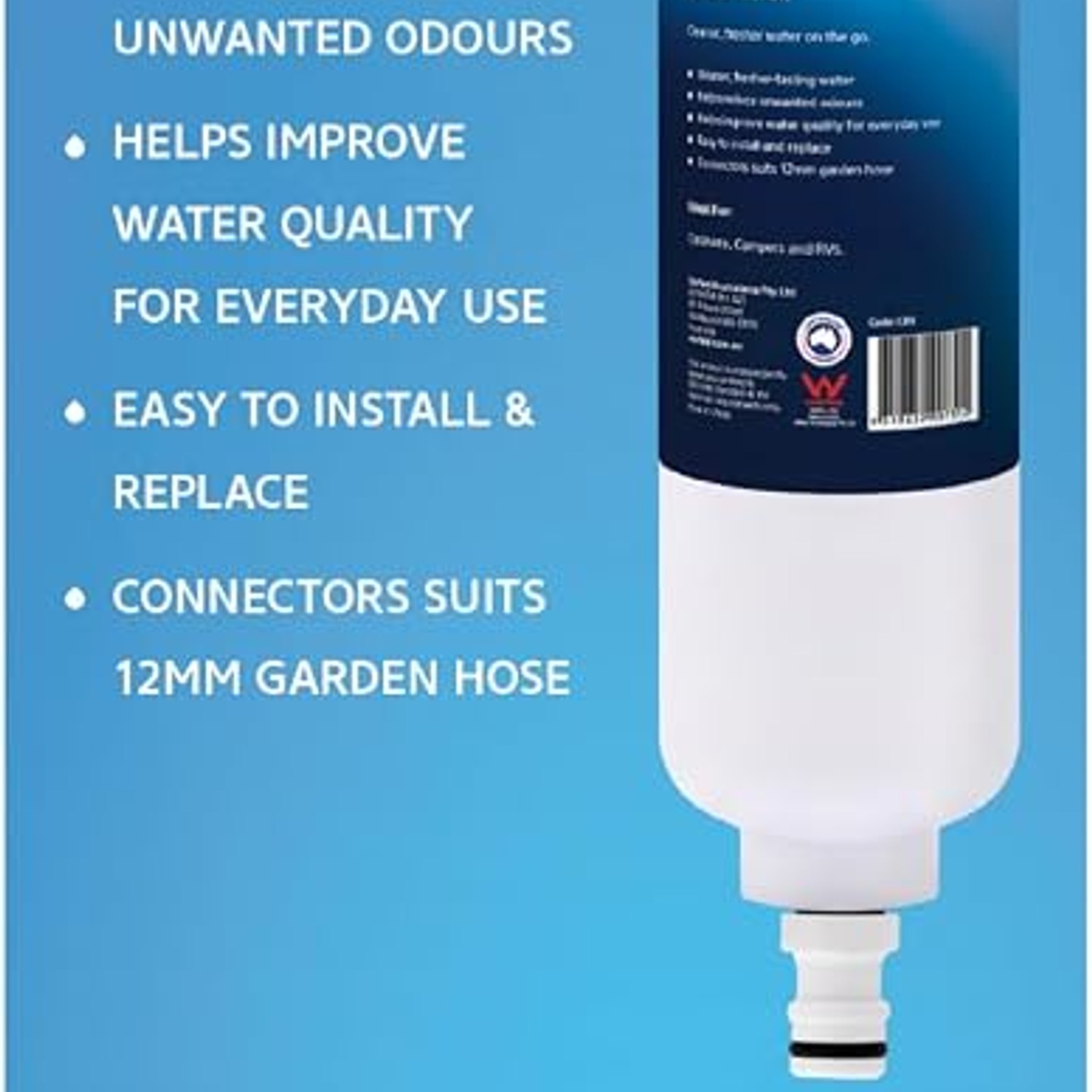
An inline caravan water filter is the simplest fix. It screws onto the hose between the tap and your van, and it is designed to reduce sediment, chlorine, odours and bad taste before any of that reaches your tank. It is not clever and it does not need to be. It just sits there doing a small job well.
How an inline hose filter works
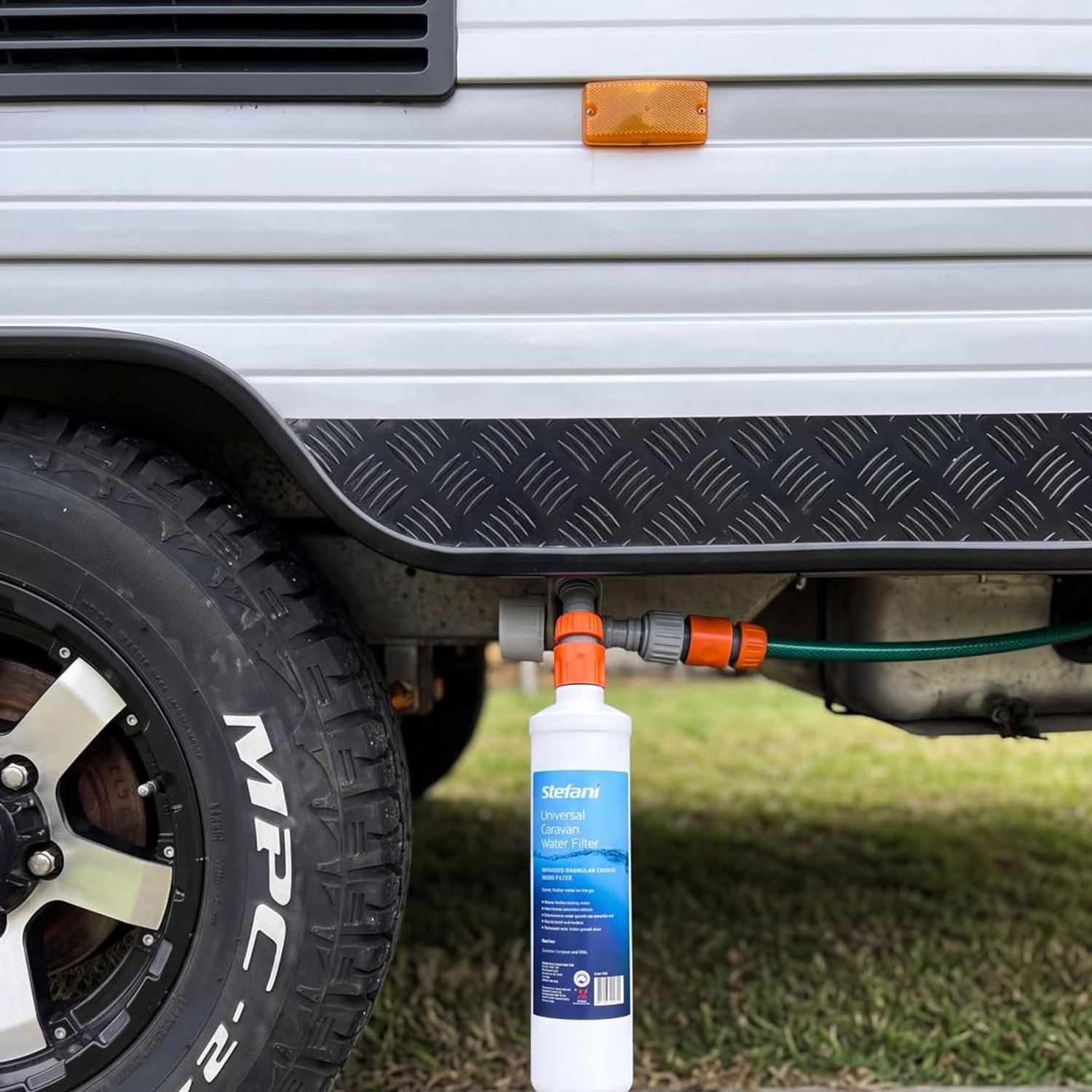
The whole thing lives inline on your fill hose. There are standard garden hose connections at each end, so your tap-side hose screws into one side and the hose running to the van screws into the other. Water passes through the cartridge inside on its way past.
What happens in there is mechanical and chemical in equal parts. Loose particles and grit get caught before they reach your tank, which is the sediment side of the job. The chlorine taste and the musty odour that often comes with long pipe runs get reduced as the water passes through the media. The result is water that tastes more like the water you are used to.
Two things are worth being clear about. First, this is for use with drinkable mains (town) water. It is a taste and grit filter, not a purifier, and it does not make questionable water drinkable. Second, the cartridge is a consumable. It needs replacing on the schedule given for it. A filter that has been quietly working for three seasons is not working much anymore.
Two ways to run it
Most people use it at fill time. You pull up, connect the hose, put the filter inline, and fill the tanks. Every litre on board has been through it. When the tanks are full you unscrew it and pack it away. This is the approach that suits free campers and anyone who moves every day or two.
The other way is to leave it inline on a powered site with mains water, so the hose feeding the van runs through it the whole time you are there. Water arriving at the kitchen tap is filtered as it comes. This suits longer stays, and it means you are not thinking about it at all while you are parked up.
The high-flow design is what makes the first option practical. Filling tanks through a restrictive filter is a slow and irritating business. A best inline hose water filter needs to let water move at a sensible rate, otherwise people stop using it, which defeats the purpose entirely.
Who this suits
Caravans, motorhomes, camper trailers and boats are the main uses. If your rig fills from a garden hose, this fits the way you already travel. There is nothing to install and nothing to modify.
It is particularly handy for people who do a lot of caravan park stays, because park taps are exactly where the taste variation shows up most. Long-stay travellers get the most out of it. Weekenders still benefit, since one filter covers plenty of trips.
It also suits anyone who cannot or does not want to modify the van's plumbing. Plenty of travellers are in hire vans, in a rig that is still under finance, or simply not keen on cutting into water lines. Because a best caravan water filter of this type is entirely external, none of that is a problem. Screw it on, use it, take it off.
What to look for when you are choosing
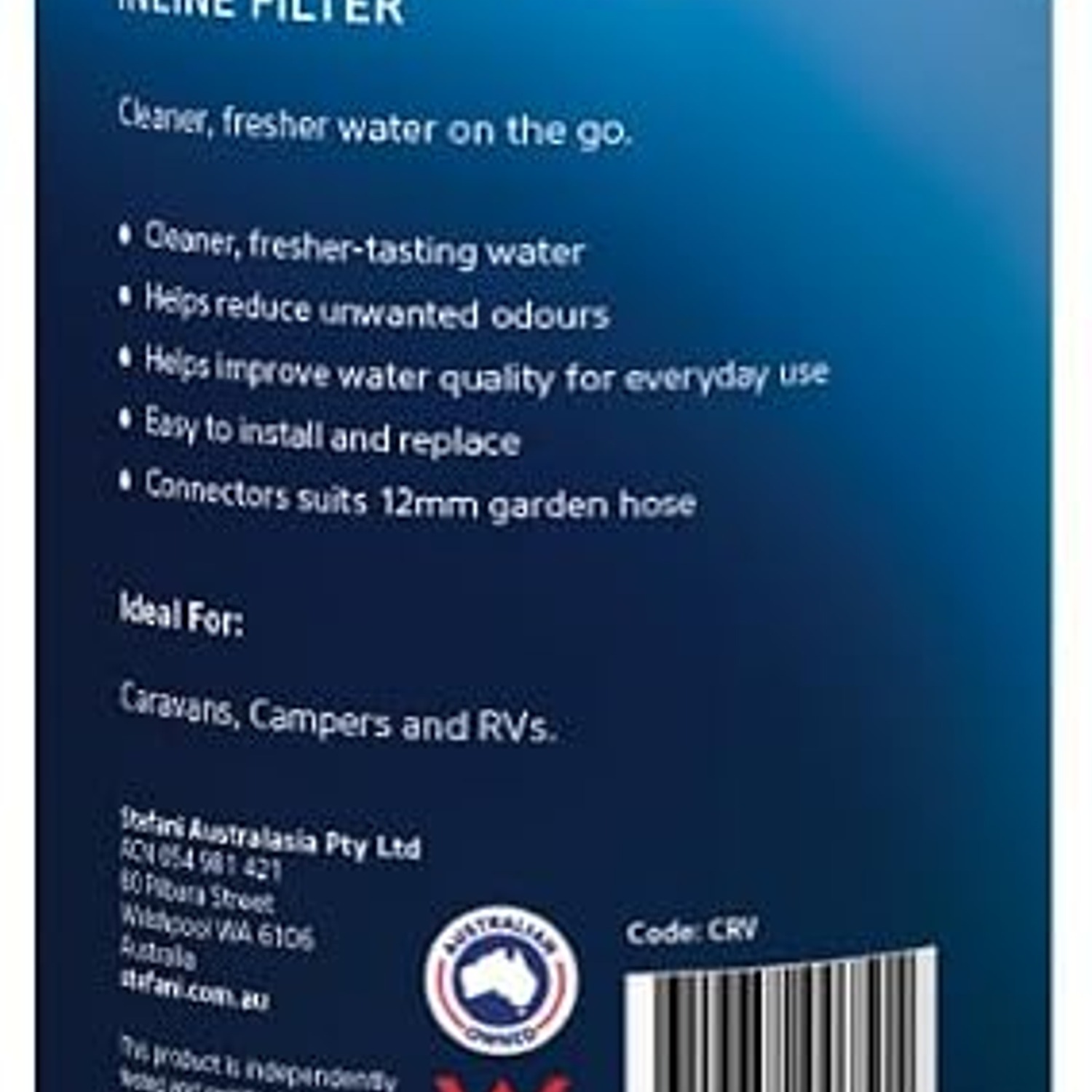
Fittings matter more than anything. Standard garden hose connections at both ends mean you can use the hoses you already own. Anything that needs adapters is a hassle you will eventually stop bothering with.
Flow rate is the second thing. A filter that halves your fill speed will annoy you by the third trip. A high-flow design keeps tank filling to a reasonable time.
Weight and bulk count more than people expect. Everything in a van is a payload decision. At 360 g this one is barely worth counting, and it stores in the same tub as your hoses and fittings.
Then there is durability. A filter that lives in a hose tub gets wet, gets dragged, gets packed in a hurry and spends summer in a hot boot. A housing built for travel is a different proposition to one designed to sit still under a sink. Look for something that can be thrown around a bit.
Last, think about cartridge replacement. Knowing you can get a new cartridge when the time comes is part of the buying decision, not an afterthought.
Setting it up
The first time takes about a minute. Check for any flow direction marking on the housing and set it up so water travels the intended way, with the tap side feeding the inlet. Hand-tighten both connections and make sure the washers are seated properly, because a missing washer is the usual cause of a dripping joint.
Turn the tap on gently at first rather than giving it full pressure straight away. Let a few litres run through before you start filling tanks, especially if the filter is new or has been in storage. That clears out anything sitting in the line and gives you a clean start.
If you use a pressure regulator, it is a separate item and goes inline as well. Park pressure varies a lot and a regulator protects the van's plumbing. The filter and regulator are not substitutes for one another.
Looking after it
Flush it with fresh water before first use and again whenever the van has been sitting for a while. That is the single most useful habit.
Drain it before packing it away. Water left inside a filter for weeks is never a good idea, and in cold weather it can freeze, which is hard on housings and fittings. Tip it out, let it drip, then pack it.
Store it dry and out of direct sun. Keep the hose threads clean so grit does not chew up the washers, since a quick wipe saves you chasing a slow leak later.
Replace the cartridge on the schedule given for it. Flow dropping off or taste creeping back are signs it is overdue, but do not wait for those as your only prompt. Carrying a spare cartridge on a long trip is cheap insurance, especially if you are heading somewhere remote.
The short version
If you tow, park water is going to vary and some of it will taste rough. An inline caravan water filter is the easiest answer available. It screws onto a standard hose with garden hose connections at both ends, needs no tools and no plumbing, and is designed to reduce sediment, chlorine, odours and bad taste from park taps and tank supplies.
Use it while filling tanks, or leave it inline when you are on a powered site. At 360 g it costs you nothing in payload and lives permanently in the hose tub. Drain it, store it dry, and change the cartridge on schedule.
It is for use with drinkable mains water and it is about taste and grit, not treatment. Within that job, it does what it says, and your morning coffee tastes the same in every town.