

The complete guide
The Practical Guide to Choosing a Benchtop Gravity Water Filter
The problem with the glass of water on your bench
Australian mains water is drinkable. That is not usually the complaint. The complaint is that it tastes faintly of swimming pool, or it leaves a flat note in your tea, or it has a slight cloudiness after the pipes have been disturbed down the street. So people buy bottled water they do not really want to buy, or they fill a small filter jug that holds about one and a half litres and needs refilling three times before dinner is ready.
A 16 litre benchtop water filter is the answer to that middle ground. It is big enough that you stop thinking about it, and simple enough that it needs nothing from your kitchen except a flat spot to sit.
How a gravity water filter actually works
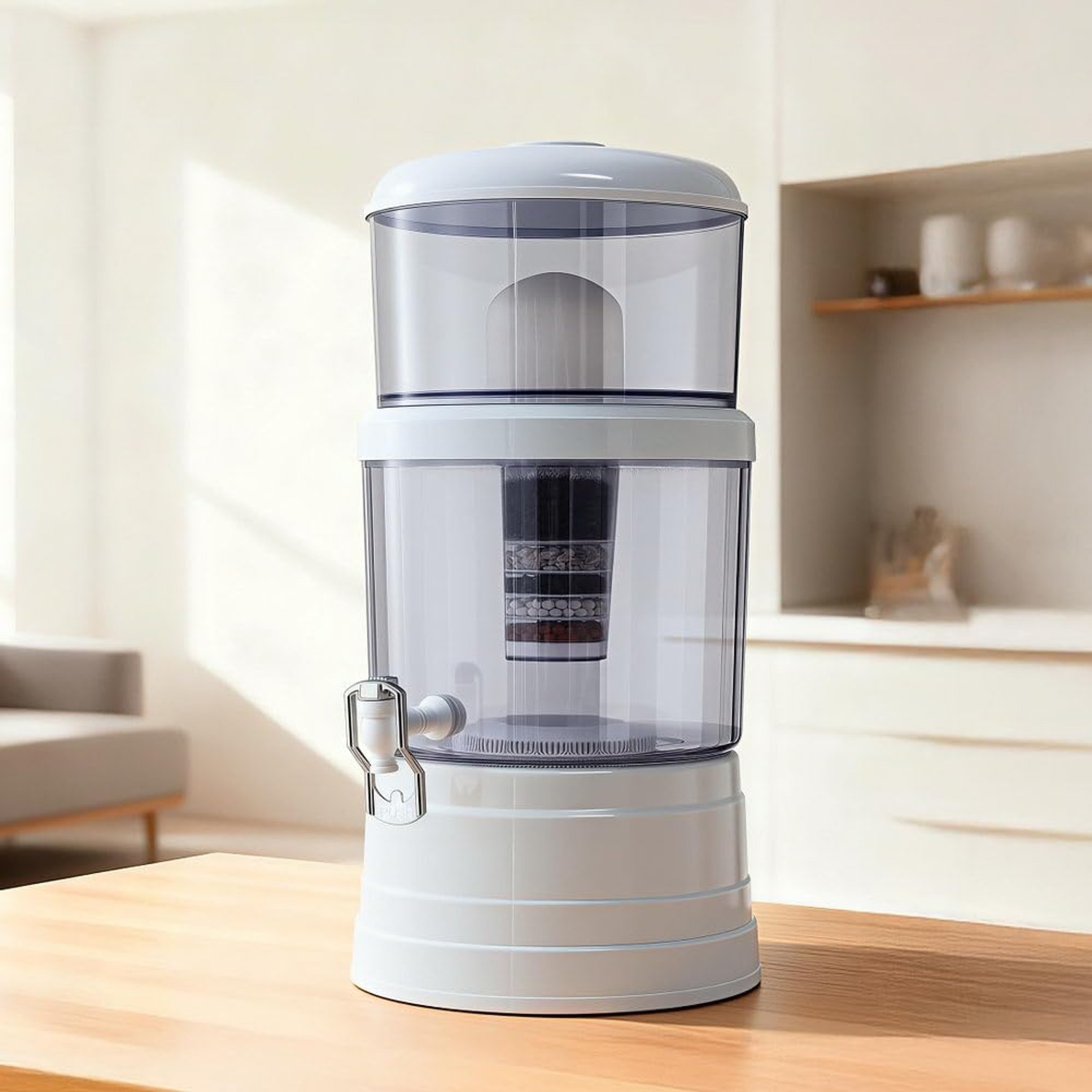
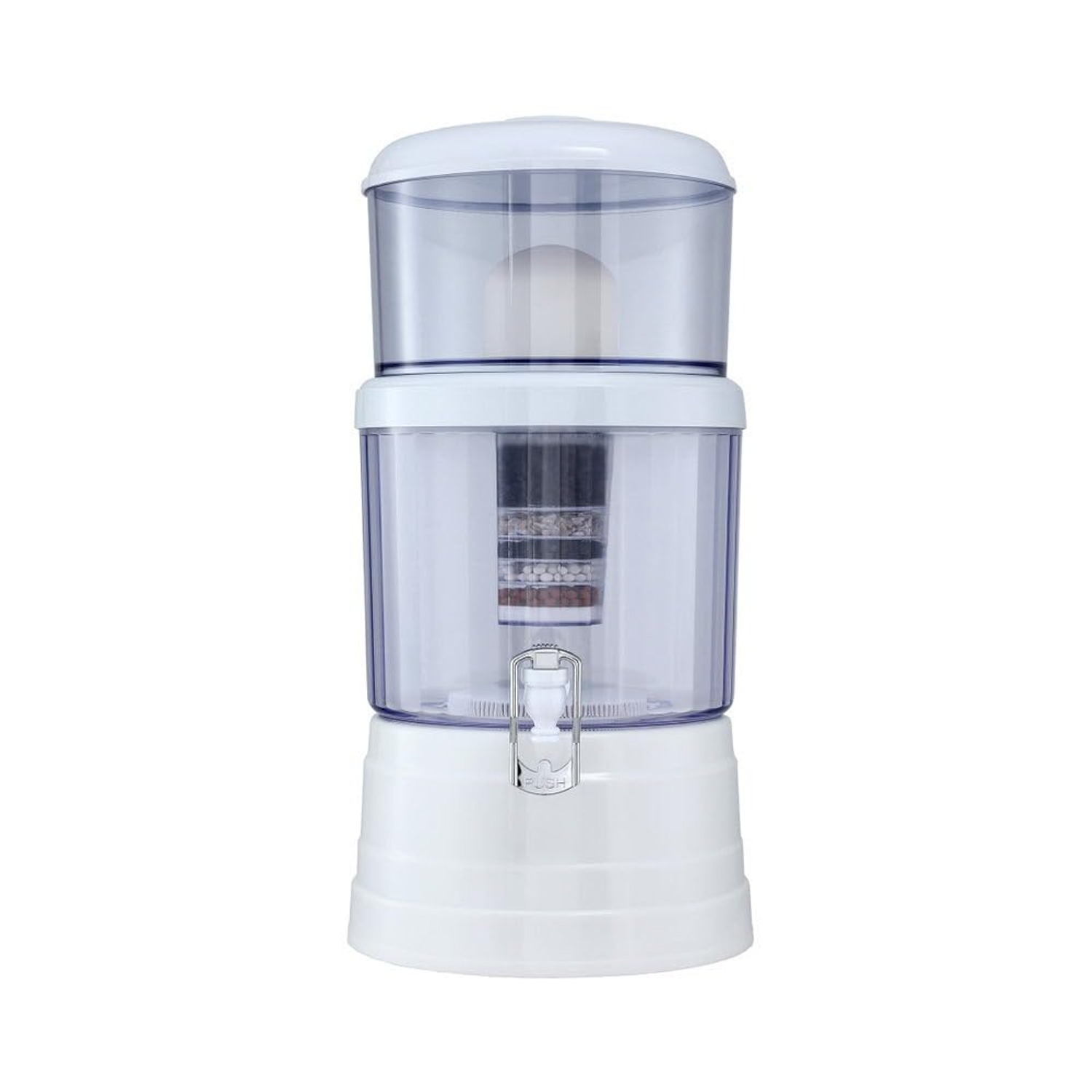
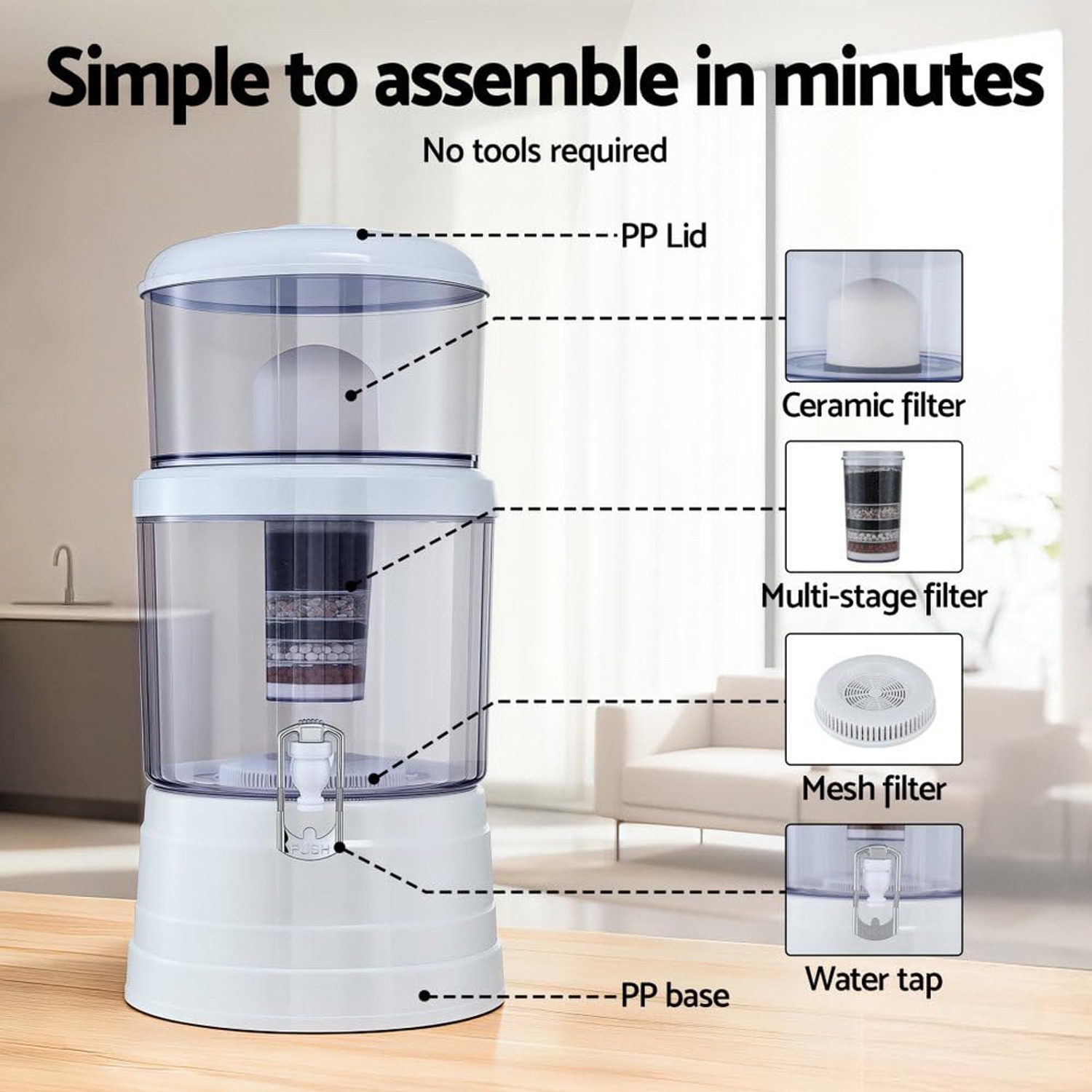
There is no clever machinery involved, and that is the appeal. The unit is two tanks stacked on top of each other. You pour tap water into the upper tank. Gravity pushes that water down through the filter cartridge that sits between the two chambers. The filtered water collects in the lower tank, which has a dispensing tap on the front.
Inside the cartridge, water meets a washable ceramic filter first. Ceramic has a very fine structure, and its job in this arrangement is to catch sediment before anything else gets a look in. After that the water moves through activated carbon and mineral layers. Activated carbon is the material responsible for the change you can taste, because it is designed to reduce chlorine taste and odour.
What you get at the tap is water that tastes fresher than what came out of the mixer. That is the honest description of it. This filter is meant for use with drinkable mains (town) water, and nothing here is presented as a treatment for untreated supplies.
Why no power and no plumbing matters
A gravity unit has no pump and no cord. That removes three headaches at once.
First, it can live anywhere. Benches are crowded and power points are scarce, especially in older kitchens and rentals. A gravity filter only needs a level surface. Second, there is no installation. Under-sink systems and tap-mounted filters involve fittings, thread sizes and sometimes a plumber. This one involves a box, a short assembly, and a jug of water. Third, it moves with you. Renters, share houses, caravans, site offices and classrooms all suit a filter that lifts off the bench and goes in the car.
The trade-off is that you refill it by hand. Most people find that a 16 litre tank only needs attention once a day, which is a fair swap for not drilling into a cupboard.
Who this suits
The maker suggests this 16 litre size for three to five people. That is a standard household covering drinking water, the kettle, the coffee machine, cooking water and the bottles that go out the door in the morning.
It also works for smaller setups where you simply want fewer refills. A couple will go longer between fills, which is no bad thing. And it earns its place in offices and workshops where there is a sink and a bench but no appetite for a plumbed water cooler.
If you are shopping for a water filter for renters, this is close to the ideal shape of product. Nothing is permanent and nothing voids your lease.
Checking it will fit
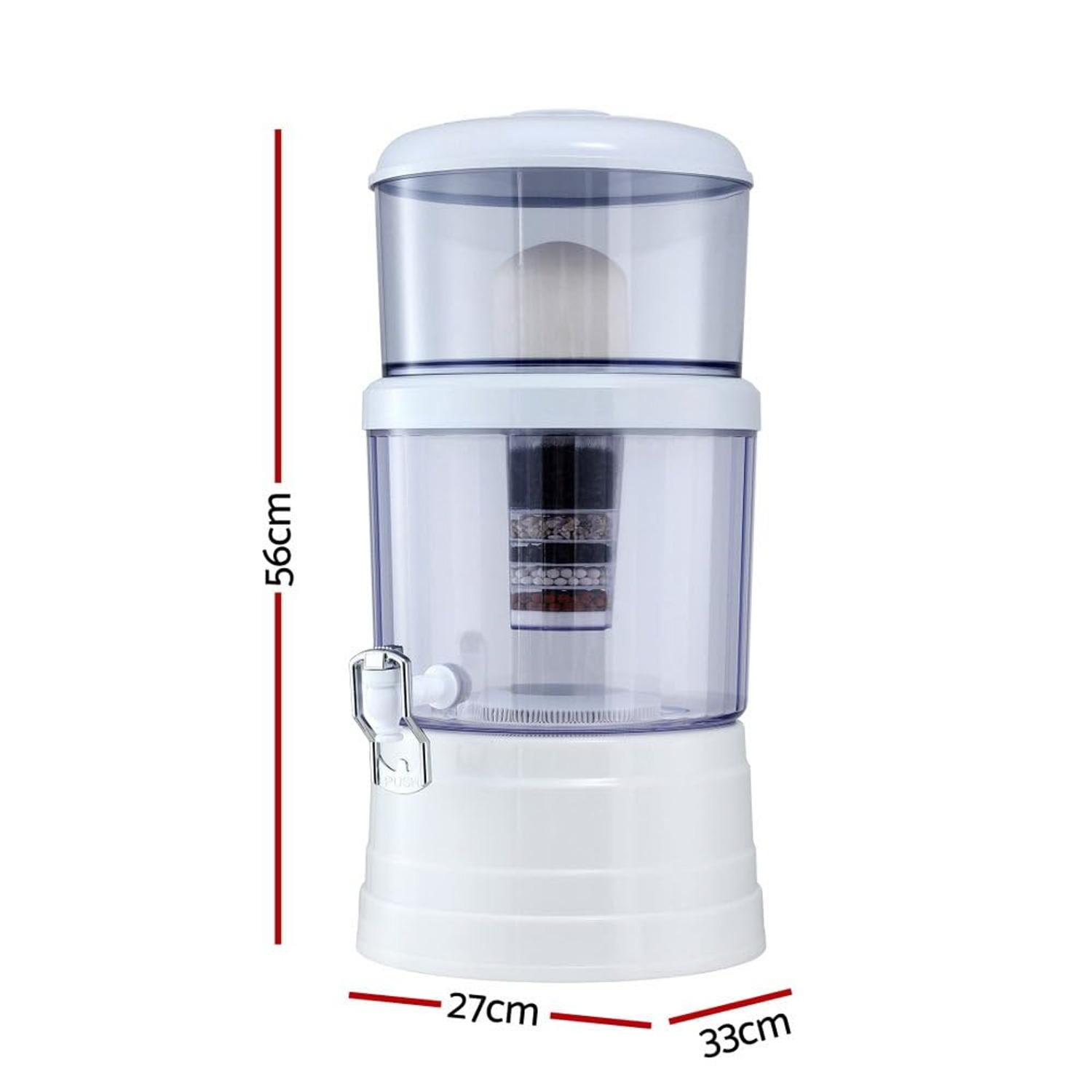
This is the step people skip and then regret. The unit is 56 cm high. That is the number to worry about, because the standard gap between a kitchen bench and the overhead cupboards is often tight. Measure it with a tape before you order.
The footprint is 27 cm wide by 33 cm deep, which is a modest patch of bench, roughly the space a small appliance takes. Leave room at the front for a glass under the tap, and ideally sit it where you can lift the lid without hitting a cupboard door.
Empty weight is 3.2 kg. Full, it is far heavier, because 16 litres of water alone is 16 kg. The practical lesson is to assemble it where it is going to live and fill it in place. Do not try to carry a full unit across the kitchen.
Build and materials
The tanks are BPA-free, food-grade PP and AS plastic, finished in plain white. PP handles the structural parts and AS gives the body a harder, clearer feel. There is no glass, so a knock does not end the story.
White is a sensible choice for a kitchen bench. It disappears next to a kettle and a toaster rather than competing with them.
Living with it day to day
Assembly is required, but it is short. You fit the filter cartridge between the tanks, attach the dispensing tap to the lower tank, rinse everything, and you are running. Follow the instruction sheet rather than guessing, especially with the tap washer, since that is where leaks start.
After that the routine is simple. Fill the top tank when it is low. Pour from the tap when you want a drink. The dispensing tap means you are never tilting a heavy jug, which is a genuine help for anyone with sore wrists or for kids filling their own bottles.
Flow will slow over time. That is not a fault, it is sediment doing what sediment does to the outside of a ceramic filter. The ceramic filter is washable, so pull it out and gently scrub the outer surface under running water. The flow usually comes straight back. Skip the detergent on the ceramic and skip anything abrasive enough to score it.
Cleaning and cartridge replacement
Wash the upper and lower tanks with warm water and a mild detergent on a regular schedule, then rinse well. Any container that holds standing water deserves this basic attention, and the lower tank is where you want to be the most consistent.
If you are going away, empty the unit, rinse it, and let the parts dry before you reassemble or store it. Coming home to a filter that has held the same water for a fortnight is a job nobody wants.
The cartridge itself is replaceable and measures 9 cm in diameter by 14.5 cm high. Replace it on the schedule given in the instructions rather than waiting for a sign. The practical backstop is flow that stays slow even after a proper clean of the ceramic. Keep the measurements handy so you order the right replacement filter cartridge.
How this compares to the alternatives
Against a filter jug, the difference is capacity and convenience. A jug holds a litre or two and lives in the fridge, which means constant refills and a cold queue of people waiting. This holds 16 litres and dispenses from a tap.
Against a plumbed system, the difference is commitment. Under-sink filters are tidy and invisible, but they need installation, they tie you to one kitchen, and they are a harder sell in a rental. A benchtop gravity water filter asks for none of that.
Against bottled water, the difference is simply that you fill it from the tap you already pay for.
The short version
This is a 16 litre gravity water filter and dispenser that sits on the bench, runs on nothing but gravity, and pushes tap water through a washable ceramic filter plus activated carbon and mineral layers for fresher-tasting water. It measures 27 cm by 33 cm by 56 cm high, weighs 3.2 kg empty, and is made from BPA-free food-grade PP and AS plastic in white.
Assembly is required but quick. The ceramic filter washes clean when flow slows, and the cartridge gets replaced on the schedule in the instructions. Use it with drinkable mains water.
Measure that 56 cm of bench clearance, decide where the tap will pour, and you have a straightforward upgrade to every glass of water in the house.